
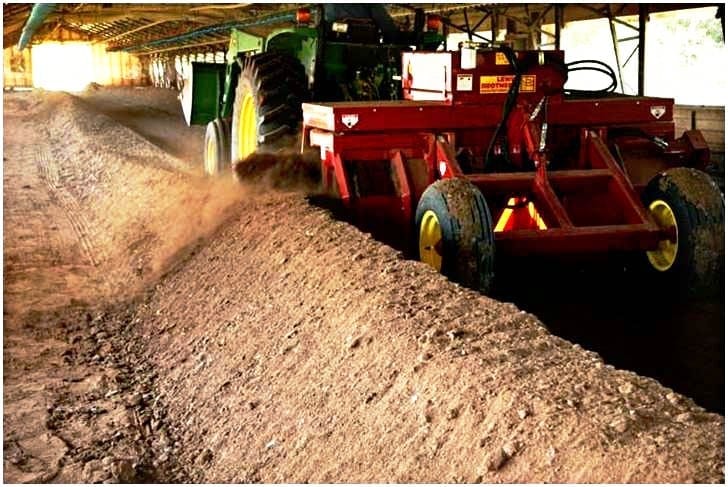
 Windrowing allows the natural metabolism of bacteria present in the litter to cause a partial composting process that generates enough heat to destroy many pathogenic bacteria and microorganisms. Litter management between flocks is crucial to ensuring a healthy environment for chicks and will help to reduce potential health problems. Windrowing allows the litter to be pasteurized and recycled for multiple flocks.
It’s impossible to entirely sterilize a poultry house, but maintaining good litter moisture, ammonia levels, and pH levels will keep bacteria levels in check. Bacteria in litter can be either spore-forming (clostridium) or non-spore-forming (E.coli). Non-spore-forming levels increase with birds present and increasing levels of fecal matter. Spore-forming bacteria tend to increase with time as litter ages and the number of flocks increases. Spore-forming bacteria is hard to destroy because the spores can withstand harsh environments, but the rapid temperature change of windrow composting can catch the bacteria in a stage.
If you are considering using windrowing as a cleaning option, you should first consider the following factors:
- Downtime between flocks – Minimum 12-14 days of downtime needed for effective windrowing.
- Number and dimensions of windrows to build – Number of windrows depends on litter depth and the equipment used. Windrow height should be at least 18” but no more than 4’. Windrows should run entire length of house.
- Turning and leveling litter before chick placement – Adequate time must be given to cooling down and drying out the litter. Spread evenly at least 4 days before chick placement.
- Litter depth – In most cases, 3-6” of litter depth is adequate, but check with your manager for guidelines.
- Insecticide application – Heating process drives beetles to the top of the windrows. Apply insecticide to windrows within 24 hours for optimal bug elimination and protection.
To effectively use windrows:
- Build windrows as soon as possible after removing birds. Pull all litter into the windrow, not leaving any along the side walls. Incorporate the hardpan into the litter but do not dig into dirt.
- Leave in place for 3 days. Goal is for windrow to reach 130°F.
- Turn, and leave in place for 3 more days.
- Spread litter out evenly at least 4 days before chicks arrive.
- Ventilate during the entire process. Run one 48” fan or two 36” fans continuously to remove ammonia. Drop curtain in curtain-sided houses.
If you have a heavy pathogen load, wash down the building before windrowing to incorporate as much dust as possible. It may take two consecutive windrowing events (flocks) to break some diseases.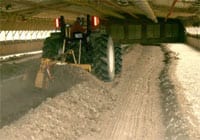
Windrowing may prove to be time consuming, expensive if you need to purchase new equipment, and present a learning curve as you learn to maneuver the equipment, but in the end, it results in fewer pathogens and improved bird performance, flock after flock.



