

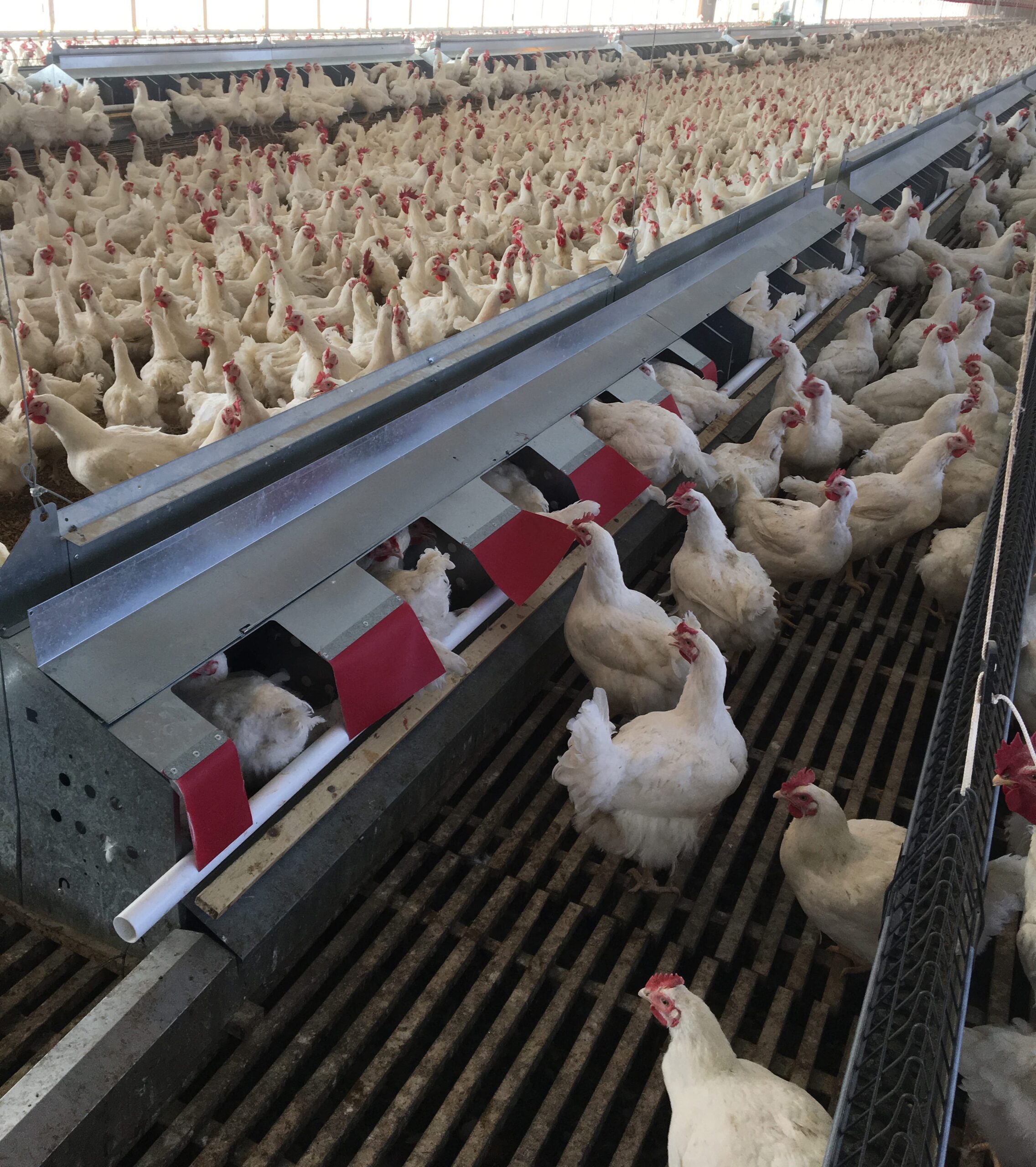
 Egg drop syndrome isn’t often talked about, but can be a problem in broiler breeder or egg laying operations. Primarily a waterfowl disease, egg drop syndrome is caused by an adenovirus, characterized by a fall in egg production or a flock’s failure to reach peak of lay.
The disease originated in ducks and was introduced to chickens through a contaminated vaccine. Ducks and geese are natural carriers and can be asymptomatic spreaders of the disease. Egg drop syndrome can be transmitted multiple ways. First it can be vertically transmitted from infected parent to offspring. The virus remains latent in chicks from infected eggs and is activated when they come into lay. The disease can be transmitted horizontally through contact with contaminated eggs, feces, and equipment. Shared egg trays or other equipment are a common culprit. Lastly, it can be transmitted directly through contact with waterfowl, or items that have been contaminated by waterfowl waste.
Some common symptoms include:
- Brief loss of egg shell color.
- Production of thin-shelled, soft-shelled, or shell-less eggs.
- Transient diarrhea.
- Depression and unthriftiness.
If the flock is infected from hatch, the flock will fail to achieve peak performance. If the flock is infected later in the lay period, there will be a 10%-40%, if not greater, drop in egg production. The outbreaks will last from four to ten weeks.
Broiler breeders and brown egg layers are often more severely affected than other breeds. There is no effective treatment. Prevention can be achieved through strict biosecurity practices. Inactivated vaccines are available and will prevent clinical signs, but will not prevent virus shedding.
The best course of action to keep this disease off your farm is to have a biosecurity plan in place, and adhere to it. Wash in, wash out, and follow strict cleaning and disinfecting measures on all equipment.



