
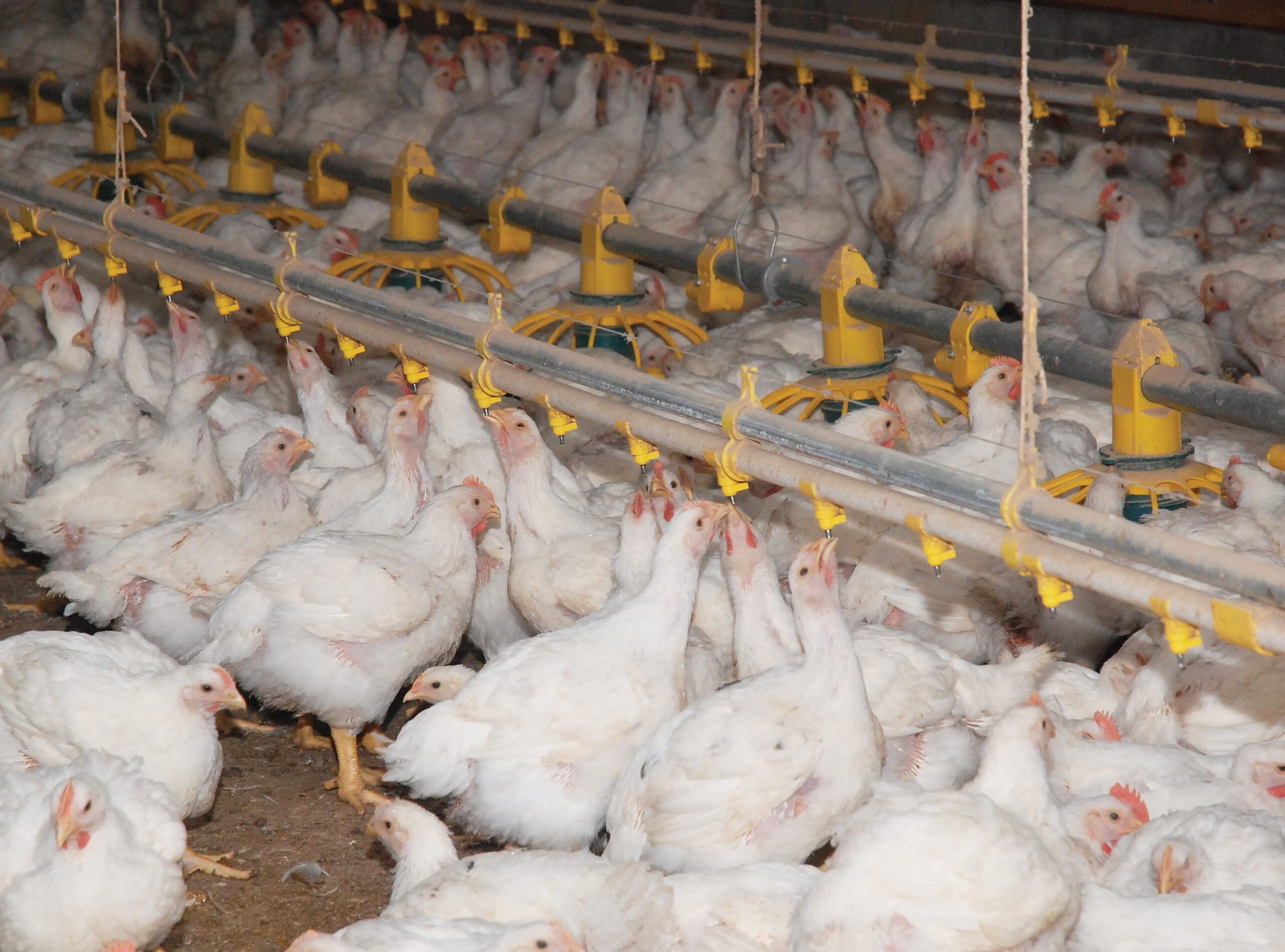
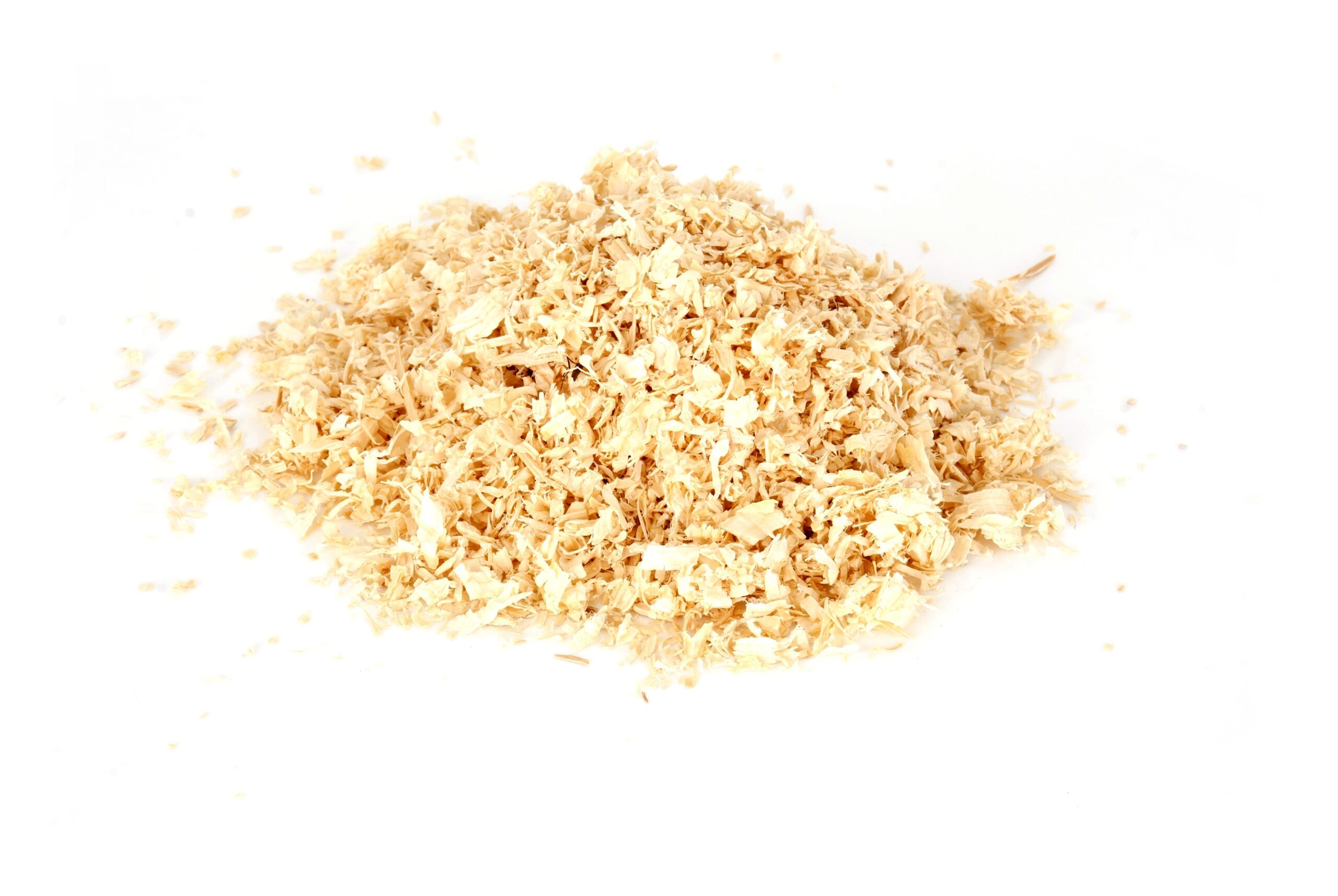
 Litter serves many roles in a poultry barn – insulation, dust bath, scratch area, and importantly, moisture absorber. This last role is important because houses that are too dry are dusty and can lead to higher incidences of respiratory disease in birds, but too wet leads to ammonia-related illnesses including footpad dermatitis, breast blisters, and ascites, or water-belly. Outside of brooding a house of new litter, too dry isn’t usually a problem. Birds constantly excrete water into their environment through droppings and respiration, along with any spillage that may occur from improper water line management or improper use of misters. The litter acts as a giant sponge, soaking up all that moisture and keeping it contained, while also keeping dust bound up in itself. You can easily tell good quality litter in a barn by taking a handful and giving it the squeeze test – litter should not excrete any liquid when it’s squeezed. Ideal litter should compact momentarily and then crumble apart.
Generally speaking, most farmers have figured out how to ventilate and manage their flocks to pretty-well control too-wet litter with conventional birds.
Enter Antibiotic-Free.
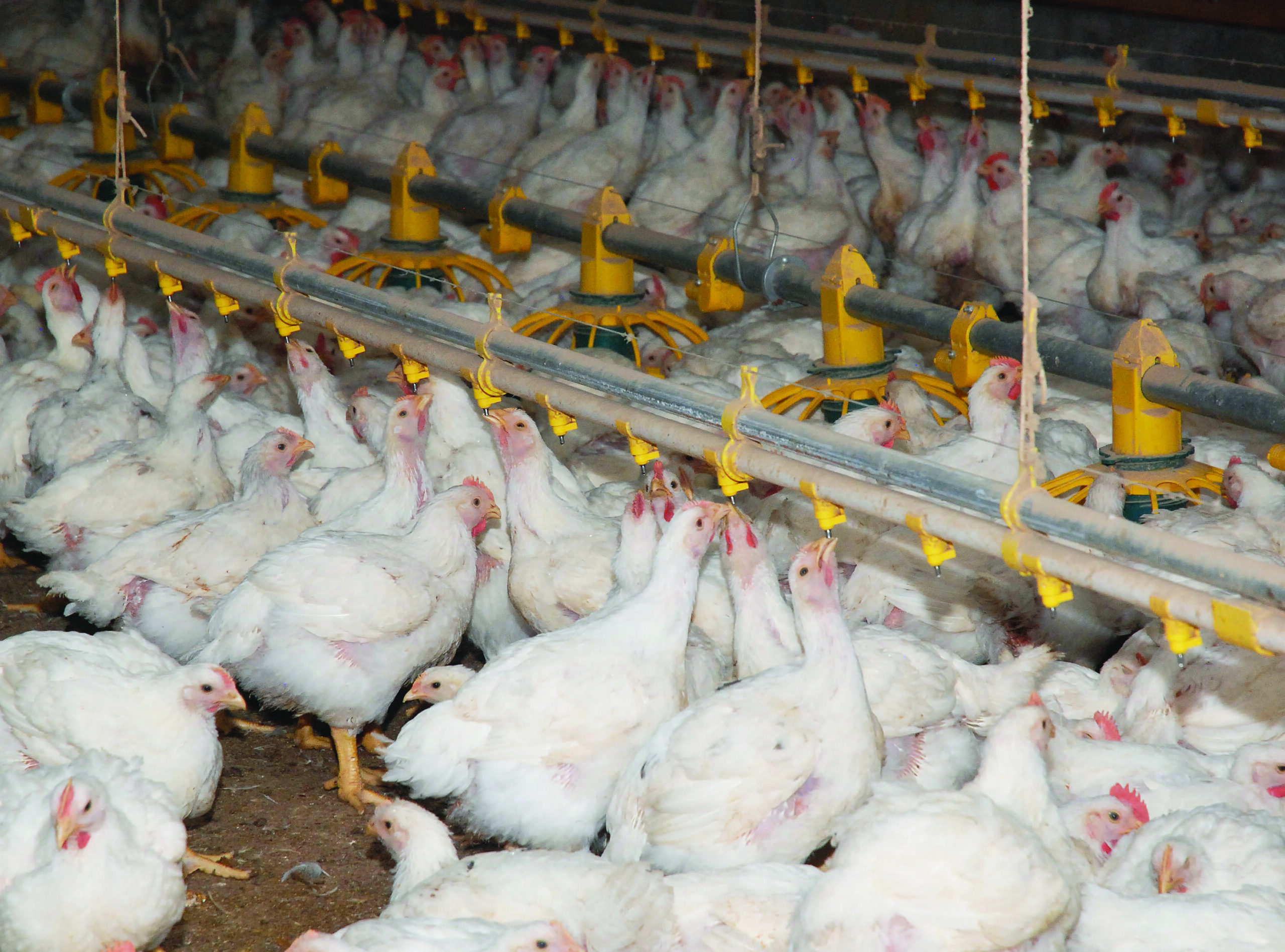 Antibiotic-Free (abbreviated ABF, and sometimes called NAE, or No Antibiotics Ever) has changed the moisture game. Without preventative additives, diets have been reformulated to try to maintain the growth in ABF flocks integrators require, but those different diets may lead to wetter droppings. Some ABF growers experience an increase in low-level disease, slowing growth and, you guessed it, increasing wet droppings.
So what can be done? Increased ventilation can dry the litter further, but at the expense of fuel in colder weather. Two things, therefore, increase in importance to help producers get the most out of their ABF flocks: Proper water line management and improved circulation of air.
Limit leaks and spills from the water lines by checking the height, pressure, and cleanliness. Birds should be able to actuate the trigger by just slightly stretching their necks upward; they shouldn’t have to sit to drink, or stand on their toes to reach the trigger pin. Too much pressure will result in wasted water, as birds won’t be able to catch all that comes out of the drinker. A clean line won’t leak (shouldn’t leak – if it does, replace your nipples) and will help maintain high water quality so birds are healthy and hydrated.
Research has shown that circulating at least 20% of the house air results in more even litter moisture levels and an overall decrease in litter moisture, even in more humid climates with a Rh of approximately 70%.
Mixing fans increase the air movement around the house and over the litter and result in drier floors. Make sure your minimum ventilation settings are set so that there is enough fresh incoming air to remove the stale spent air from the house. Humidity is at its lowest during the peak hours of the day, and greater air movement at this time will result in the most moisture removal from the house.
In closing: ABF looks to be a trend on the rise, but that doesn’t mean you have to experience worse performance from wet litter.



