
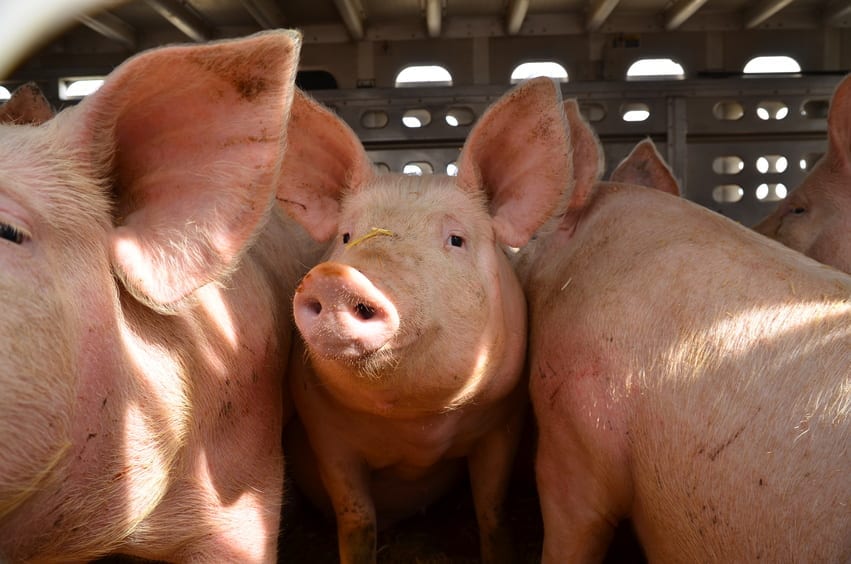
 Stress on pigs during transport can cause losses; not just pig losses, but it can adversely affect the meat quality. Stress in transport can cause meat that’s too soft and pale or too dry and firm. This stress begins with the movement out of pens or barns so stress reduction should be front of mind from the beginning of the process.
A lot of stress occurs when physical exertion is driven by fear – usually handler fear. Handlers should regularly release pressure from the pigs – moving slowly and exercising patience. Releasing pressure refers to any action that reduces the level of threat handlers impose on a pig. To release pressure:
- Pause and let pigs move away
- Avoid making physical contact
- Let the pigs circle past
- Keep quiet
- Look away
- Reduce the group size
Pigs communicate fear with their body language. Pay close attention to their eyes, ears, and body movement. Pigs will look at and focus on the thing that is intimidating them. A calm pig can stay a safe distance from a handler and get release from the pressure. As pressure grows and release decreases, their stress will become more intense. A pig will experience extreme fear if stress is prolonged and they get no release.
Calm Pigs
- Hold head and ears low, body relaxed.
- Move at a walk or trot, or exuberant outbursts if excited but not scared.
- Focus attention mostly forward.
- May have low pitched vocalizations.
Pigs Showing Mild Fear
- Have raised heads and ears.
- Move away but with increasing attention towards the handler.
- Have an expanded flight zone.
- Possible brief increase in speed.
- Will calm down if pressure is released.
- Will become fearful or defensive if pressure is maintained or increased.
Pigs with Heightened Fear
- Full attention is on the handler.
- Stops, backs up, turns back or tries to get past handler because its efforts to move away aren’t working.
- Shuts down and refuse to move. This is a defensive response different from being too tame or fatigued.
- Bunching up and is difficult to sort or separate.
- Will calm down after some time if pressure is released.
- Will escalate to extreme fear if pressure is maintained or increased.
Pigs with Extreme Fear
- Panic.
- Willing to run under, over or through handlers and obstacles.
- Scrambles and show out of control movement.
- Vocalizations are high pitched.
- Bunches up and is difficult to sort or separate.
- Show severe stress symptoms which may lead to death.
Handlers should avoid:
- Electric prodding
- Ineffective tool use
- Too many handlers working in an area
- Applying too much pressure and not enough release
- Yelling or other loud noises
- Rushing the pigs
- Working pigs in large groups
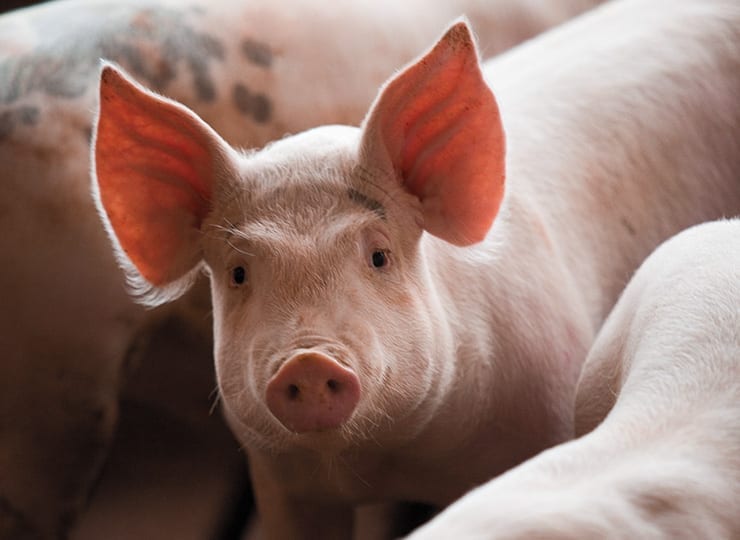 Stress is extra hard on pigs because their hearts are small relative to their body weight and they don’t sweat to cool themselves. They can quickly become worked up and this stress can be fatal. Pigs go through several stages of stress before it reaches a critical level, but they can move through these stages in a matter of minutes, so it’s important to help pigs to remain calm as best as possible.
The signs of stress:
- Rapid breathing
- Elevated body temp
- Faster heart rate
Prolonged stress:
- Panting
- Skin discoloration – becomes red and blotchy
- Refusal to move
Advanced stress:
- Intensified blotchiness
- Rapid, frantic breathing
- Gasping squeaking noises
- Collapse
Understanding pig behavior will go a long way to reducing stress, resulting in happier, calmer pigs, and better quality meat. Ensure that all workers have gone through PQA+ or TQA certification (find a trainer here), and, as always, closely observe your animals. They’ll tell you how they are doing.



