
Preventing E. coli Repercussions in Swine Rearing
 Escherichia coli can cause serious disease and has frequently been a thorn in the side of the swine industry for many decades. E. coli is not as common in swine as it is in other meat producing industries (such as cattle), but still has a lasting effect on how growers manage and maintain their hogs. E. coli causes monetary loses in the form of vaccination costs, decreased market weight of the pigs, and the loss of income due to mortality. You can easily understand why growers put so much time and money into trying to prevent this disease from being prevalent on their farms.
There are many different types of E. coli that can be contracted by pigs, some strains even change every season, but all require immediate attention. Some of the major strains are K88, K99 and F18, and each strain has its own respective vaccine. E. coli is often picked up in young pigs during farrowing and weaning when the pigs’ antibodies are low, allowing the disease to easily attack their weakened system. E. coli can be present in pigs of all ages; the symptoms are usually milder the older they get. The disease is usually picked up when sanitation processes in the house are less than adequate or not followed at all. If the pig’s environment is not well maintained, then more of the bacteria that causes E. coli will be present. Infection is spread is through access to fecal material, so piglets are especially susceptible to this because of feeding and exploring around the mother.
Some ways to help prevent E. coli on your farm:
- coli is able to rapidly reproduce within the herd because of stress. Creating a stress-free environment will go a long way in preventing the rapid spread of this disease and will allow for less monetary loss if E. coli does strike. Below are a few guidelines to follow to ensure that E. coli does not take over your farm:
- Ensure that the facility housing sows is sanitized and fully dry before placing them into the barn.
- Vaccinate pregnant sows 14-21 days before farrowing so that the sows’ antibodies increase and are spread to the piglets through the mother’s colostrum.
- Keep house as dry as possible. Leaky waterlines and openings in the house allow for water to collect creating damp conditions, allowing coli to flourish. Check your barns daily for any issues.
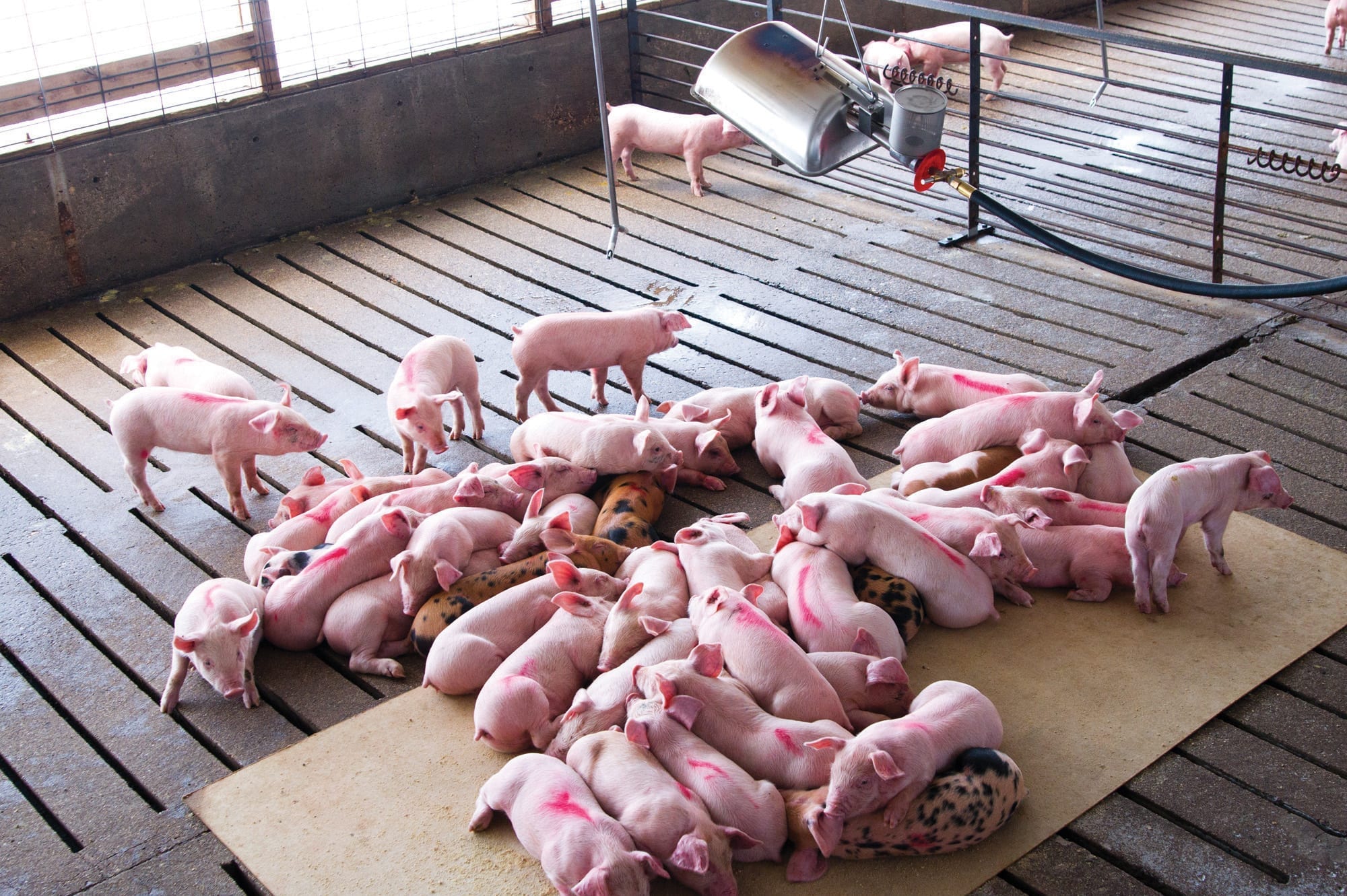
- Ensure that farrowing rooms are kept warm (70° to 75°) to avoid damp conditions. Areas with small piglets should be kept even warmer to prevent chilling (85° to 90°).
- Keep mother sows’ feces away from piglets as much as possible; make sure the crate is cleaned often.
- Have a biosecurity plan in place and posted at all entrances. Exposure to infected pigs may come from outside sources visiting the farm.
- Ensure the barn is ventilated properly. Poorly ventilated areas allow for rapid spread of coli.
These protocols can be implemented to create a safer environment for your pigs. Following these steps gives you a greater chance of a happy, successful outcome.



