
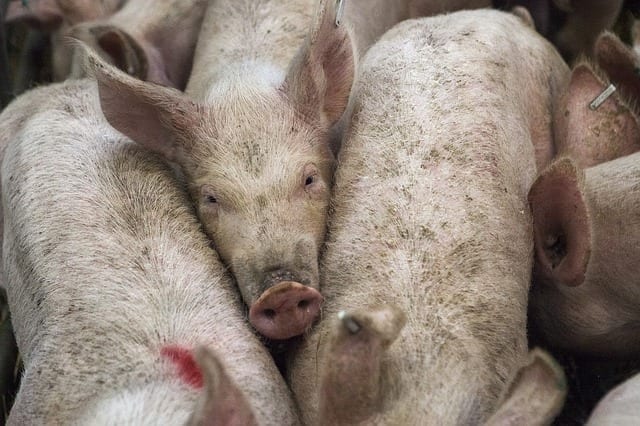
 For most of the 20th century, African Swine Fever had been comfortably concealed in Eastern and Southern Africa. First described in Kenya in the 1920’s as an acute hemorrhagic fever, African Swine Fever was noticed in domestic swine after they had come into contact with wildlife, primarily warthogs.
With globalization and industrialization came the spread of disease. The first case of African Swine Fever in Europe occurred in Lisbon, Portugal in 1957, which occurred on a farm nearby the airport that had fed its pigs airline food scraps.
Localized incidences of the disease have since been reported across Europe, Asia, and the Caribbean, as well as isolated incidents in Brazil. In 2007, delays in recognizing the illness in Georgia resulted in an epidemic spread through the Caucus and parts of Russia.
While mostly eradicated following each of these outbreaks, the disease remains a lingering threat to the global hog market. Recently, confirmed cases in Russia, China, Belgium, Poland, and Romania have resulted in mass culls. A continued spread – especially through China, the world’s largest producer and consumer of pork – could result in complete decimation of the global hog market.
African Swine Fever is a looming reality for hog producers everywhere. The disease is highly contagious. There is no vaccine. There is no cure. It is transmitted through direct contact. Direct contact includes pig to pig, ingestion of infected meats, contact with fomites (humans, vehicles, equipment), and in some areas, tick bites. ASF is not harmful to humans, however, it is a hardy virus, making the human factor the most likely vector.
The virus can survive for several weeks in cold or warm weather, in pork products, on surfaces and on transport vehicles. It can survive traditional meat preparation methods, including cooking and smoking. It doesn’t die with rot, and it doesn’t stop when frozen.
 Because pork is a key protein source, as well as a source of income, it is imperative farmers take preventative measures. The best form of protection is to understand the nature of the virus and the take every biosecurity step possible. Disinfect housing and equipment between herds. Clean and disinfect vehicles. Wash in and wash out of barns. If this isn’t an option, wear protective clothing, and wash your hands. Never feed hogs food scraps. Keep wild boars away from the farm.
Should infection occur in your area, be on the lookout for these signs:
- High fever
- Loss of appetite, depression
- Limb discoloration, appearance of bruising
- Hemorrhages on ears and abdomen
- Unsteadiness while standing
You may notice groups of infected swine lying together, shivering, breathing abnormally, and sometimes coughing. If not caught early and culled, pigs will eventually go comatose and die. The cycle from infection to death usually takes 6 – 12 days. The only way to be sure the disease spread is halted in a herd is to mass cull. Be sure to have a plan in place for euthanasia and disposal if this becomes a reality, but take every measure to prevent it in the first place.



