
 We’ve all seen it before – it’s the middle of the day and your broilers are hunkered down on the floor, wings slightly spread, and panting fast. Your birds are too hot, and are spending their energy trying to cool themselves rather than eating, drinking, and growing. In swine we see similar actions – pigs lying flat on their sides, trying to leach off some heat to the cooler concrete slats, breathing fast and shallow, maybe even rolling in the dunging area in an effort to get some cooling through evaporation.
Heat stress is a regular summertime occurrence in many parts of the world, and results in decreased consumption of feed, increased water usage, and overall worse production. Reduced feed intake accounts for up to 30% of the reduced weight gain during heat stress. Heat stress also impairs immune response and intestinal integrity causing decreased nutrient digestibility.
While common, decreased production from heat stress should not be thought of as inevitable. Here are some steps you can take to minimize the effects on your livestock.
Feed during the coolest part of the day
Feed withdrawal 4-6 hours before and during the hottest part of the day, usually between 10 am and 4 pm, can limit the heat increase in the house. This only really works in there is a substantial difference between daytime highs and nighttime lows, when livestock can be offered compensatory.
Keep the water cool
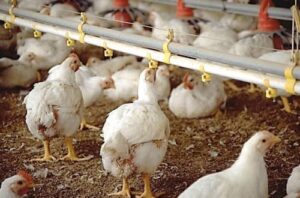 Water from a well will already be cool. If you have above-ground tanks, shading them will help keep the water a few degrees cooler than the air. Flush water lines frequently to keep cool water in the house.
Adjust water supplements
Heat stress leads to animals drinking more water in an effort to cool themselves, which can have the negative effect of losing electrolytes and leads to acid/base imbalances and likely diarrhea or scours. Consider supplemental electrolytes in the water during hot weather, just be sure to flush them out promptly after administering them to reduce the growth of biofilm in the lines.
Offer (or reduce) certain feed additives
The more antioxidants the better, as heat stress causes an increased generation of oxidative species. Vitamin E and betaine can help cells retain their integrity during period of heat stress, and may encourage additional water consumption. Conversely, check to make sure feed doesn’t contain unnecessary fiber or non-essential amino acids during hot weather, as these promote fermentation in the gut, leading to higher internal body temps.
Reduce densities (if practical)
While not always possible, reducing densities during hot weather will obviously remove heat from the building, and allow more air around remaining animals. Depending on current densities and levels of heat stress, reducing density may even lead to overall more production, as the 20-30% production loss of heat stress is lessened by a lower density of animals.
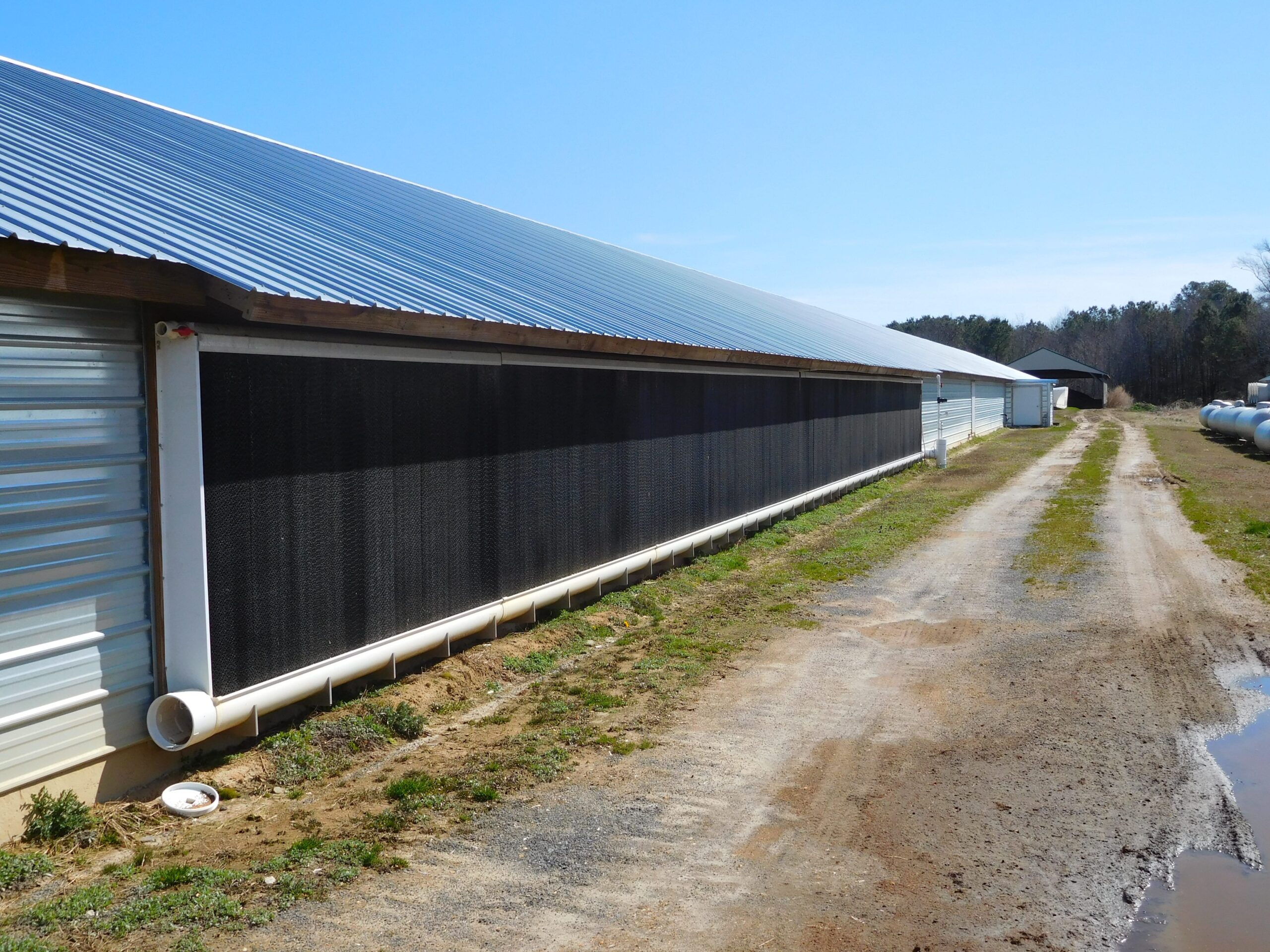
While it’s important to help your livestock cope with the heat, it’s also important to limit their exposure to it. The proper combination of air speed and evaporative cooling techniques can help to limit the amount of heat in the barn.
 Adequate air speed in poultry barns will dissipate the heat between and under the birds that results from their decreased movement. Air speed (when below the animals’s skin temp) also helps pigs and birds to lose heat to the air more effectively, as it moves over their skin. Evaporative cooling, whether through cool cells, fogging, or sprinkler systems, will overall decrease the temperature in the barn. Learn more here.



