
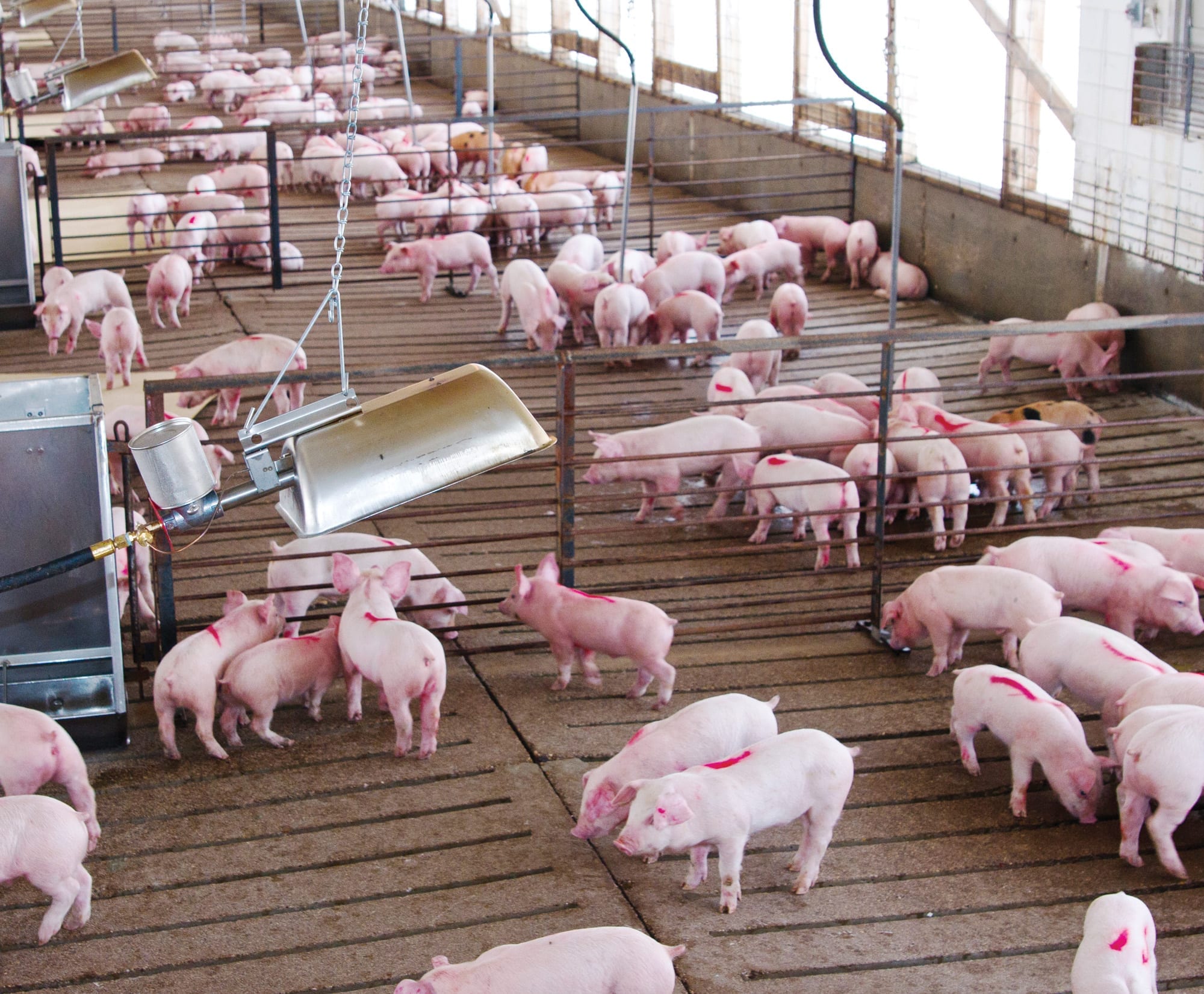
 Poor air quality impacts not only animals but also human health and welfare. Gases released by animals and equipment, dust, and airborne microorganisms, when in high concentration, may contribute to the occurrence of diseases. This article will discuss the leading causes, consequences, and solutions for poor air quality in swine production.
Gases
Ammonia, carbon monoxide and dioxide, methane, and hydrogen sulfide are the main pollutant gases present in a swine barn. Animals produce ammonia, and it is eliminated in urine and feces, which accumulate in the pit below the floor. Ammonia gas is toxic in high concentrations; the maximum concentration recommended for workers and swine is 7 and 11 ppm, respectively. Ammonia poisoning is related to respiratory tract inflammation, decreased feed intake, behavioral alterations, and reduced performance.
A high carbon monoxide concentration is associated with gas-fired heaters used in the facility. It causes mortality because of its high affinity for hemoglobin, displacing oxygen from its receptors. Carbon dioxide, which is mainly originated from swine respiration, is less harmful than monoxide, but it may cause respiratory damage when in high concentration (>1,540 ppm).
Methane is potentially toxic for animals and is an explosion hazard. Hydrogen sulfide gas is dangerous and fatal for pigs and humans when in concentrations greater than 100 ppm. The presence of hydrogen sulfide in a lower concentration (less than five ppm) can be detected by the smell of sewer gas present in the barn. The respiratory tract may be affected when animals and humans are exposed to 10-100 ppm of this gas.
Dust and airborne microorganisms
The presence of dust is inevitable inside the barn. However, the greater the amount, the greater the problems associated with it. The recommended maximum concentration of dust is 2.4 and 3.7 mg m3 for humans and swine, respectively. Its level is related to several factors such as ventilation, the feeding system, overcrowding, and animal movement. The dust may act as a facilitating agent for infections by reducing the respiratory tract’s protective barrier or being a means for propagating pathogenic agents.
How to reduce the negative effect of gases and dust on animals and humans?
Several studies tried to solve this problem by using different strategies and equipment. First, it is essential to follow the basic principles of pig production. It includes controlling housing (good facility design, 8-9 ft ceiling), environment (temperature, humidity, ventilation, filtration), and management (all-in/all-out, control number of animals/m2, change in a diet focused on reducing nitrogen in excreta, adequate emptying of the pit). Beyond the basics, the use of air scrubbers, fans, recirculating ventilation systems, dust control systems, and aerosol treatment were tested and demonstrated to be a way to improve air quality.
Therefore, air quality must be assessed considering its multiple factors and properties. The first step to avoiding poor air quality is measuring gases and dust inside the facilities. The decision-making based on data acquisition can help farm managers to find the best strategies to improve air quality, both for pigs and employees.



