
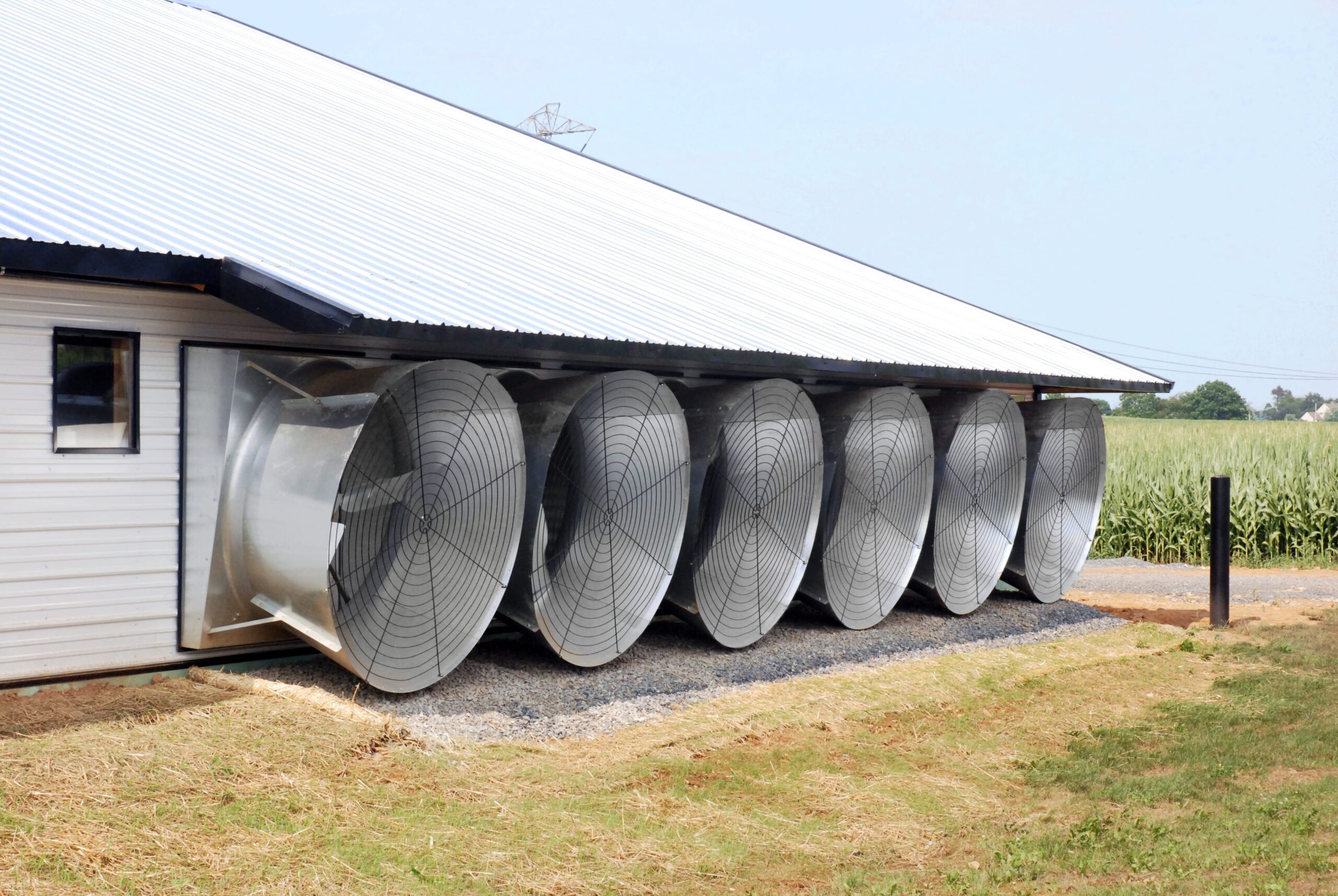
 The ideal bird environment can pay back in dividends, but if mismanaged, be costly to a farm. Investing in the bird environment will always pay better in the end.
There are several primary goals to ventilation. Ventilation should:
- Evenly distribute fresh air to the entire flock.
- Remove excess heat and moisture.
- Limit the accumulation of harmful gases.
- Keep litter dry and friable but minimize dust.
- Maintain a consistent ambient temperature.
A good ventilation program removes heat, moisture and dust from the building, but also dilutes airborne disease organisms. Properly managed ventilation will improve the health of a flock by limiting respiratory illnesses, maintaining foot pad health, and encouraging food and water consumption.
Ventilation is a challenge with constantly changing seasons, temperatures, bird ages, bird densities, and a multitude of other factors.
If you have doubts about your ventilation, you should look for these warning signs:
- Foul smell
- Hazy air
- Panting birds
- Reduced feed intake
- Birds crowding walls or huddling together
- Abnormally loud birds
- Walls wit with condensation
- Wet, caked litter
- Low 7- and 14-day body weights
If any of these things appear to be an issue on your farm, you may have to consider upgrading your ventilation program and equipment.
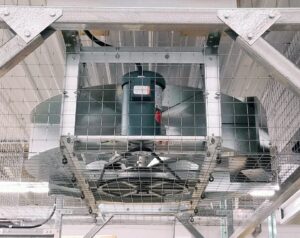
A good place to start is with fans. Fans need to be able to move a certain amount of air per minute, and often older fans cannot keep up with the demands of modern birds. In addition to being able to remove stale air, circulation fans should be used to move air around the confines of the house. This helps to improve temperature uniformity and moisture absorption, resulting in drier litter. When s
hopping for fans, you should look for one that equally balances fan power and energy efficiency.
It’s also wise to evaluate the insulation in your buildings. Solid side walls will conserve more energy than curtain-sided buildings. Attic insulation will also help to maintain the internal barn temperature by preventing heat loss in the winter, or solar heat gain in the summer. Insulation does have a tendency to move or compress over time, so it’s advised that it is evaluated annually, and replaced as needed.
Fans are usually controlled by thermostats and timers that are wired to the controller. It important to monitor the components to make sure they are operating together and that they are always in good working order. One worn out thermostat could result in overheated or chilled birds, and the effect could be detrimental to bird performance.
Always have supplemental heating and cooling methods available for use during extreme weather conditions. These systems will require their own regular maintenance, but can be the difference in performance and flock results.



