
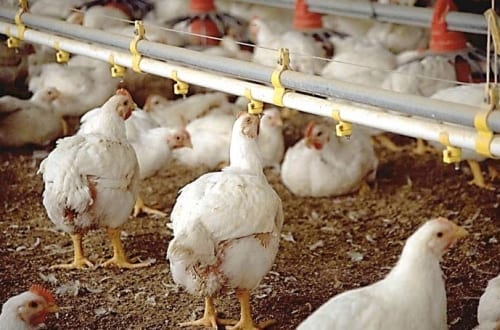
 So many factors can affect the quality of poultry flock, but water is the most important. It’s easy to take for granted, especially in areas where water quality isn’t a daily concern. Drinkable quality and high quality are not the same, though. Paying close attention to the quality of the water will always result in a better-quality bird.
Mississippi State University composed a great article on the importance of high quality water and how it can be achieved. We will highlight some key takeaways here.
Closed does not mean clean.
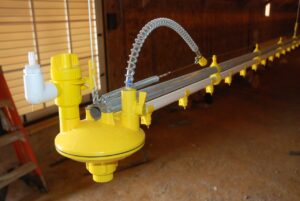
When poultry was raised using open water systems – troughs and cups – it was easy to see when the water was dirty. Today’s closed systems still get dirty, clogged with mineral build-up and algae.
Water supplies are unique and dynamic.
No two wells are the same. Water supply can be affected by droughts or floods, site selection or well depth, or any number of other environmental factors.
It’s easy to mineral overdose.
Modern poultry feeds are perfectly balanced with the right amount of minerals and salts that a bird needs to grow. When the water carries too high a mineral load, it is easy for the birds to consumer too much, and performance will suffer due to poor digestive function, lower immunity, or other problems.
Biofilm
A complex community of bacteria, fungi, algae, encased in an extracellular polysaccharide attached to a surface. Or… that slimy green stuff. And it’s a breeding ground for contaminants. Additives often promote the growth of biofilm making it important that lines be flushed, cleaned, and flushed some more pretty regularly.
Be sure to flush long enough to completely purge the lines.
-
- A general rule of thumb is to flush one minute for every 100 feet of water line.
- If you have a 400-foot house with approximately 200-foot water lines in each half, then each line should be flushed for about two minutes.
-
- ALWAYS flush after use of any products in water to help keep lines clean
Don’t overlook the pH of your water supply.
-
- In general, birds do not like to drink high pH water.
- High pH water tends to have a bitter taste that birds are able to recognize, and this may reduce consumption.
- A reduction in water intake will mean a reduction in feed intake!
-
- A pH above 8 will prevent most sanitizers from performing their best.
- A pH below 5 may affect intestinal health, create a bloom of algae or mold that thrives at low pH levels, and damage metal drinker system components.
- A pH in the range of 6.2 to 6.8 appears to work well.
- If the pH of your water is above 7.0, lowering the pH may benefit overall flock performance.
Water sanitation
-
- Household bleach is likely the most commonly used water sanitizer on poultry farms
- You should have 3 to 5 ppm of free chlorine at the end of the line for your sanitation program to be effective.
-
- More than 5 ppm may be too strong and could back the birds off water and possibly damage the drinker system.
- Less than 3 ppm chlorine is likely too weak and will prove ineffective against organisms in the water supply
Reduce and clean biofilm
-
- Stabilized hydrogen peroxide works well on biofilms because it is a very good oxidizer and can hydrolyze (or break down) the biofilm.
- In addition, it is non-corrosive to the drinker system and quite effective on bacteria, fungi, and viruses.
- It can break down algae thoroughly enough to allow it to pass through nipple drinkers without causing the nipple to clog or stick.
- However, in general, the stabilized hydrogen peroxide products are not as user-friendly as some less effective products.
-
- Common brand names include Proxy-Clean, Siloxycide, HydroLine, and others.
Over time, scale buildup can reduce the pipe volume and cause regulators and nipples to malfunction. If the pH of your water is above 7 and the water supply contains more than about 60 ppm of either or both calcium and magnesium, then scale buildup is likely.
To remove scale buildup from the water lines, you’ll need to use a strong, acidic cleaner that is safe for nipple drinkers and can drop the pH of the water to below 6.
-
- Also remember that acids are not sanitizers. Acids are only part of a larger, overall sanitation program; they are not the entire program.
- For example, if you suspect a biofilm problem, you’ll need to run a good sanitizing cleaner that can dissolve the biofilm before you use the acid.
- The acid will not be able to cut through the biofilm and, therefore, will be unable to remove any scale buildup that may exist.



