
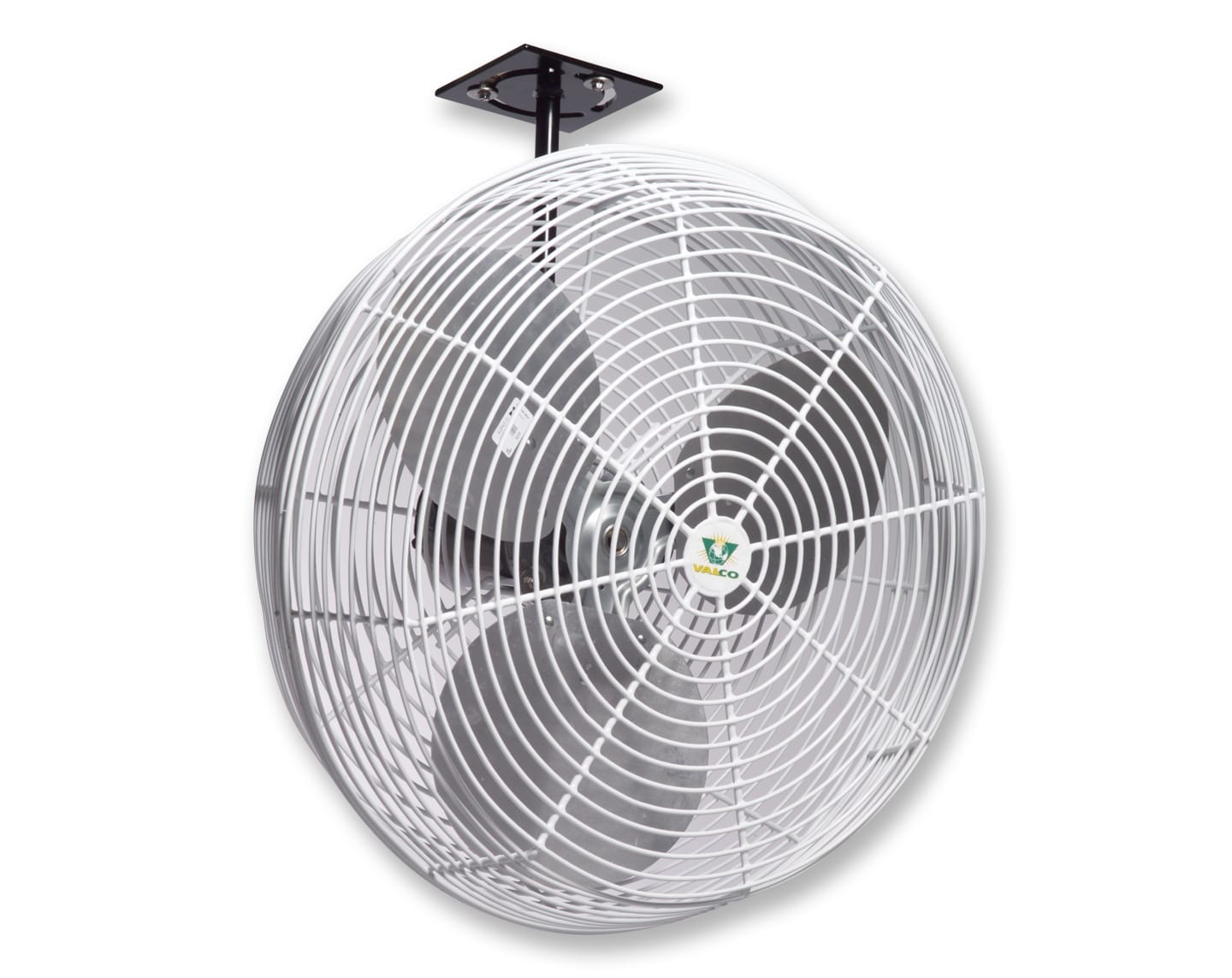
Have we underestimated the power of the circulation fan?
You probably have circulation fans in your poultry house. Maybe about 8 or so that are 1/10 horsepower. They move a little bit of ceiling air, but you really don’t pay them much mind. You put them in to minimize fuel usage… it may or may not have worked.
Sound familiar? Historically, circulation fans have been installed as an attempt to slowly move ceiling air around the barn – from end to end and side to side – with the intent to reduce temperature variance and heating costs. Producers installed a few down the center of the house, turned them on, and didn’t pay too much mind after that.
But what if we’re underestimating the power these fans have in improving barn conditions (and, consequently, bird health and welfare)? Some new studies conducted by Mike Czarick and Brian Fairchild at the University of Georgia looked into the effects circulation fans had on litter quality. See the full discussion here.
Litter quality, measured in terms of moisture level, has a direct impact on bird health. Too much moisture leads to too much ammonia, foot pad lesions (used as a measure of animal welfare), twisted legs, and respiratory issues.
Their research was spurred by the idea that litter could be adequately dried in a relatively humid environment if enough air is moved along the floor. By increasing the air velocity and volume that is moved along the ceiling so that the air velocity at the floor reaches between 100 and 200 feet per minute, the litter moisture remained low – below 25% – even with a relative humidity around 60%.
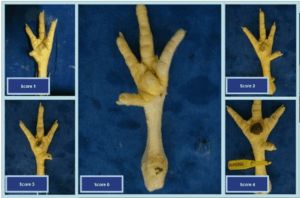 Additionally, their research found that the increase air movement resulted in more uniform litter moisture across the house, more uniform house temperatures, and more uniform flock spread. This drier litter resulted in fewer foot pad problems during grow out and lower ammonia levels in the air.
Want to give their theory a try in your own barns? You’ll need more powerful fans. They recommend using larger fans – 24” or 36” – with at least 1/3 horsepower motors. Or check out our Hemisphere Mixing Fans – designed specifically for pushing air along the ceiling and towards the walls. Watch this video to see it in action.



