
 Biosecurity has been at the forefront of every farmer’s mind since the outbreak of Avian Influenza in 2015. With the reappearance of Avian Influenza across Europe, it’s imperative that farmers stay vigilant in protecting their farms from disease.
Generally, biosecurity is the protection of health through avoidance of disease. But more broadly, this includes the implementation of measures that reduce the risk of the introduction and spread of disease agents and this requires a set of attitudes and behaviors by people to reduce risk in all areas of production.
Biosecurity comes in two different forms, bio-exclusion and bio-containment. Bio-exclusion is external biosecurity that combines all activities that prevent the introduction of disease to a farm, whereas bio-containment is internal biosecurity comprised of efforts to prevent the spread of a disease within the farm and to other farms. All biosecurity has three main goals, isolation, sanitation, and traffic control, and three steps for achieving them, segregation, cleaning, and disinfection.
Segregation keeps uninfected animals away from infected ones by means of barriers of control. These barriers should be physical whenever possible and procedural when not. Whether barns consist of a full wash-in-wash-out facility or simply require changing footwear, the practices should be deliberate and consistent.
Most pathogen contamination on physical objects is contained in fecal matter, urine, and other secretions that adhere to surfaces, therefore, proper cleaning is required to remove these pathogens from surfaces to stop of spread of disease. Soap and water and a scrub brush are normally adequate for smaller surfaces, like footwear or buckets, but high-pressure washing may be necessary for larger surfaces, like tractors or trucks.
Disinfection should occur shortly after cleaning by means of application of an agent that will destroy bacteria and viruses directly to clean surfaces. Disinfectants do not penetrate dirt and are deactivated by organic material such as feces and wood, therefore specific and liberal application must be done.
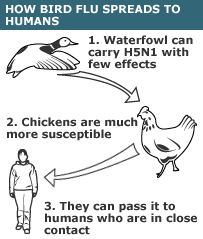 Disease can spread through direct animal-animal contact, through semen, airborne transmission, and by people through the means of contaminated footwear, clothing or even nasal mucous. Vehicles and other fomites can carry disease long distances and to multiple facilities, manure and bedding can harbor infectious bacteria if not removed and replenished regularly, and wild animals such as birds, bats, and rodents, can carry diseases and parasites between farms that may be too close together. Regions that have a large livestock population are at greater risk for disease, so there is a need for more specialized biosecurity practices. An emphasis on the flow of aerosols, insects, vehicles and people in these regions is important to limit cross-contamination between farms.
Important biosecurity practices:
- Gather medical history or new reproductive livestock and test a representative sample of the herd or flock before purchase.
- Physical location of the herds or flocks should be planned so that a sufficient buffer area is present between barns, neighboring farms, and frequently used roads.
- Considering filtering incoming air to reduce pathogens if you find that you are at risk for airborne disease transmission.
- Only essential people have access to the farm and they follow strict procedural guidelines for entering (clothing change, footwear change, hand-washing, or showering).
- Deliveries should be scheduled so that trucks visit contaminated farms last. Nucleus herds should receive deliveries on Mondays, after a weekend of downtime.
- Decontamination of vehicles before entry to farm premise is necessary to prevent cross-contamination of workers and farm vehicles.
The following are key principles to vehicle disinfection:
- Clean vehicles as soon as possible to reduce pathogen load;
- Wash trailers with high-pressure water and soap, leaving no organic matter behind;
- Disinfect vehicles with a product designed for livestock and ensure that the correct concentration, volume, and contact times are fulfilled;
- Allow vehicles to fully dry before transport.
Want to learn more about biosecurity and how you can protect your farm? Read the white paper here.



