
When farmers started bringing hens indoors in the 1940s it was to protect their flocks from extreme weather conditions, illnesses, and predators. Over the past 50 years, farmers have done an amazing job of producing safe, affordable eggs while raising healthy hens. Recently, under scrutiny of animal welfare groups, businesses have promised to source only cage-free eggs. Though armed with good intentions, these promises have put a tremendous strain on egg farmers as the market struggles to maintain its balance. The switch to cage-free egg farming is imminent, but many farmers have never raised hens outside of cages. So where do they begin?
 Every farm should first start by choosing pullets that were raised under the same conditions they would be housed in as adults. Using an aviary system? Choose pullets raised in an aviary. Secondly, pullets should have ready access to feed and water to meet their target growth. Lastly, and maybe most importantly, pullets need to become accustomed to a regular lighting program.
Light serves three major functions throughout a chicken’s life: 1. It facilitates sight; 2. It stimulates internal cycles such as the Circadian Rhythm; 3. It initiates hormone release affecting metabolic regulation, reproduction, and bone formation.
During the first week of age, pullets require about 20-22 hours of bright light – about 30-50 lux (3-5 foot-candles). This amount of light allows their eyesight to develop fully and encourages regular eating and drinking. A few hours of downtime are required for proper rest, ideally during natural nighttime.
To stimulate feed and water intake, consider employing an intermittent lighting program – cycling light and dark periods for the first 7-10 days. To do this, leave the lights on for about four hours straight, turn them off for two hours, and repeat the cycle throughout the day. By doing this, chicks will develop normal patterns for rest and activity and their behavior will become synchronized. Weaker chicks will be pushed to the water and feed by the stronger chicks, helping to reduce early mortality. After 10 days, return to a regular lighting program.
After the first two weeks, reduce light intensity to about 5-10 lux (.5-1.0 foot-candles) with light being brighter at the feeder than inside the housing system. The length of day should be reduced weekly until it reaches about 9-10 hours around week 6.
From approximately weeks 7 through 10, gradually increase light intensity by increments of 5 lux per week until it matches the intensity used in the laying house. The length of the day should be kept the same, about 9-10 hours. Hold this pattern steady until pullets are transferred to the laying house, where they should be given adequate time to adjust to their surroundings. To avoid physical complications and to get the best egg quality, it is advised that the pullets be allowed to reach their full weight (about 17-19 weeks) before using light stimulation to induce lay.
To induce lay, increase light intensity and duration (according to breed standards, as different breeds have different light requirements), until daylight reaches about 16 hours. A minimum of 10 lux is required throughout the house for visibility, however, lighting of 30 lux at the feed and water source can lead to increased production.
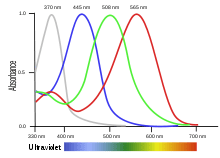 Further research has shown that the color of light can have many effects on hen behavior, growth, and reproduction. Birds sense light through their eyes (retinal photoreceptors) and through photosensitive calls in their brains. Each color has an effect on birds during different stages of production. Green light can increase early growth in poults, while blue light increases growth at a later age. Long wavelengths (the red end of the spectrum) penetrate the skin and skull more readily and have the greatest effect on bird reproduction. Red light is indicated by chromaticity values under 3000K in fluorescent bulbs, but other lighting options carry correlated color temperatures (CCTs) for the express purpose of use in hen housing. Light emitting diodes (more commonly known as LEDs) have taken precedence is the egg industry. They give monochromatic light from different wavelengths, most accurately imitating natural light with the longest life span and lowest energy costs.
It should be noted that if the pullet or hen house allows for a significant amount of natural daylight – through windows, curtains, or fans – it is best to tailor the artificial lighting programs in accordance with the patterns of natural light. Doing this may result in lower electricity costs, but also guarantees that all the birds in the house remain on the same light schedule. Even if the house is completely closed off from natural lighting, simulating dawn and dusk lighting, especially in aviary systems, will help birds to move off the floor and up into the system. To simulate nightfall, dim the lights at 15 minute intervals starting at the floor and moving upwards to encourage the birds to higher resting areas. This will help keep the litter clean and reduce floor eggs as the birds will be closer to the nesting areas come morning. To simulate dawn, bright lighting near the nesting areas will encourage birds in to the nests, then lighting the other tiers will promote movement around the barn. To stimulate nest box usage throughout the day, alternate periods of brighter light around the nest box.
This article first appeared in Midwest Poultry Consortium publication The Feathered Pen. See the publication here.



