
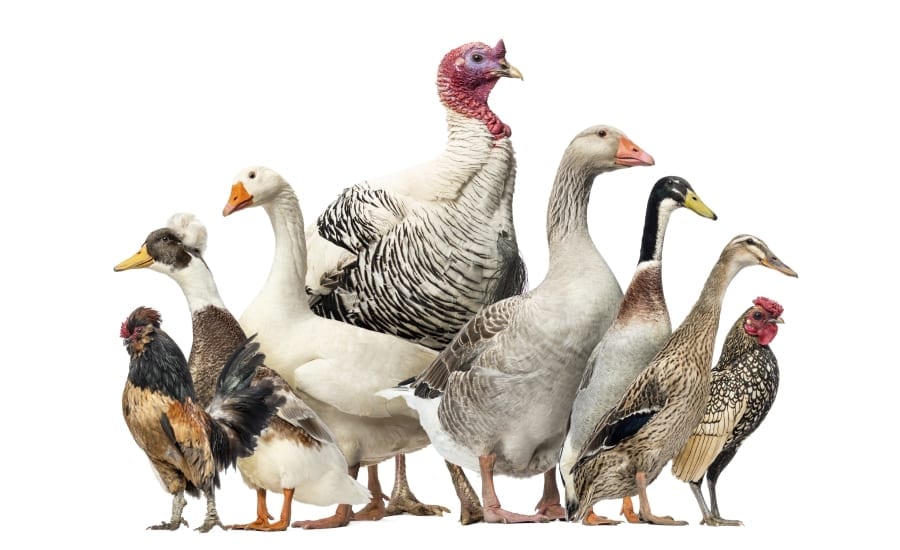
 Avian influenza, or bird flu, is carried by wild birds who are immune to its effects. While these wild, often migratory, fowl do not show signs or symptoms of the disease, they do act as carriers and can spread disease quickly over large areas. Domesticated birds – including chickens, ducks, quail, pheasants, and even ostriches – are highly susceptible to the avian influenza virus (AI). There is no treatment, so the only means of eradication from a farm is mass culling – making AI the last thing you want your livestock on contact with.
There are two forms of avian influenza. The milder form – Low Pathogenic Avian Influenza – commonly goes undetected, but may result in ruffled feathers and fewer eggs. It’s less contagious, and not usually fatal. The more infamous form – High Pathogenic Avian Influenza – is highly contagious and results in almost 100% mortality. It affects the internal organs and causes lesions noticeable in autopsy.
Transmission of Avian Influenza
Infected birds shed virus in their saliva, feces, and nasal secretions. When uninfected birds come into contact with infected birds or infected surfaces, they too become infected. All it takes is one bird to come into contact with wild bird feces in the yard, drink out of an infected water way, or come into contact with the infected clothing of a farm employee. Cage or housing surfaces, food, and water can spread the disease rapidly throughout a house and farm.
Symptoms of Avian Influenza
- Sudden death without any signs
- Lack of coordination
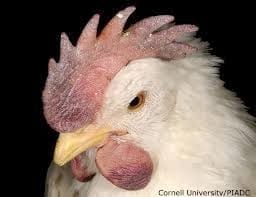
- Purple discoloration of wattles, combs, & legs
- Soft-shelled, misshapen eggs
- Lack of energy and appetite
- Diarrhea
- Swelling of head, eyelids, comb, wattle, and hocks
- Nasal discharge
- Decreased egg production
- Coughing, sneezing
Treatment of Avian Influenza
There is no treatment for avian influenza in bird populations. Eradication by slaughter is usually the only option, making prevention the best, and only, option.
Prevention of Avian Influenza
Most disease introduction, including that AI, can be prevented by deliberately practicing and enforcing strict biosecurity.
- Use an “all-in, all-out” management system.
- Prevent flocks from coming into contact with wild or migratory birds.
- Permit only essential workers and vehicles on the farm.
- Provide clean clothing and disinfection facilities for workers.
- Thoroughly clean and disinfect equipment and vehicles.
- Do not loan/borrow equipment to/from other farms.
To learn more about biosecurity, read our blog post Protecting the Farm with Biosecurity or download the White Paper here.
HPAI is transmissible to humans. Farm employees and others in the field should exercise caution and cleanliness to ensure that infection does not spread to themselves, their families, or other humans.
Always report sick birds or unusual deaths for your state and federal officials, your state veterinarian, or the USDA via their toll-free line at 1-866-536-7593.



