
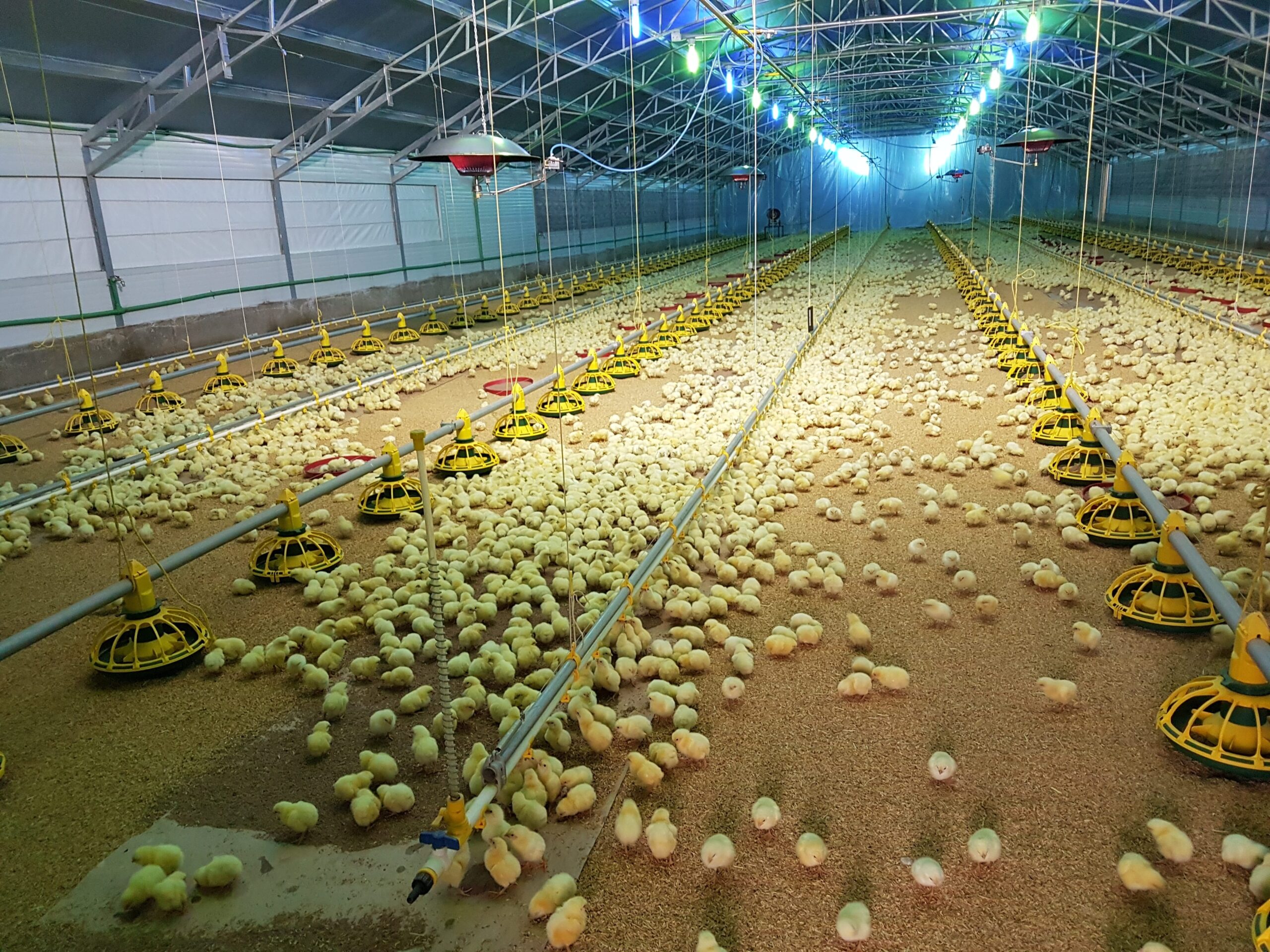
 Winter farming comes with a unique set of challenges, especially where litter and air quality are concerned. Respiratory diseases are common in winter when there is less ventilation, and their prevalence has only been increasing since the use of antibiotics has been on the decline.
Brooding is arguably the most important developmental stage and eliminating environmental stressors during brooding will improve health and performance over the entire life of the flock. The moisture level of the litter directly impacts the air quality of the barn and the quality of life for the birds. Wet litter leads to increased ammonia levels, which, if not managed, result in a variety of health and welfare concerns.
High litter moisture creates a favorable environment for bacteria growth and increases ammonia levels. Ammonia inhalation results in cilia paralysis – a condition where the mucociliary elevator in the trachea fails to remove the bacteria from the respiratory tract.
This gives bacteria direct access to the respiratory system and the blood stream, causing airsacculitis, pneumonia, septicemia, and overall decreased immunity.
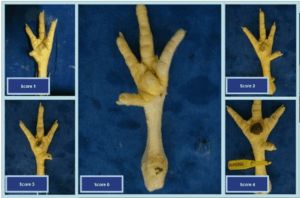
Additionally, ammonia also causes paw lesions (foot pad dermatitis) when birds’ feet come into contact with its liquid form in the litter. The paws soften when standing on wet litter. Litter sticks to the paws and the ammonia begins to erode the skin. This happens very predictably and within a standard window of time, if litter conditions are not ideal, and is therefore used as a measure of animal welfare.
To improve both litter quality and air quality, aim to have an ideal litter moisture level between 20 and 35%. Good farm management practices will help manage litter moisture. Here are some tips:
- Preheat the litter 48-96 hours prior to chick placement to purge floors of ammonia and warm litter
- Run minimum ventilation to keep relative humidity at 50-70% during brooding.
- Maintain a litter depth between 4-6 inches for optimum moisture-holding capacity. Decake between flocks
- Use acidifiers to neutralize ammonia
Remember that acidifiers can be used as a temporary tool to prolong litter life but should not be used as the sole method of litter treatment. A proper program will include decaking, windrowing, composting, or heat treating to kill pathogens and release ammonia. A good minimum ventilation program will improve both air quality and litter quality, and performance in kind.



