
 Before we get started on why drinker line height is so important, there are a few facts you need to know:
One: Chickens consume 1.75 pounds of water for every pound of feed. This is a constant.
Two: Chickens have a maximum rate at which they can consume water, and this rate changes with age. To determine what this rate is, use this equation: [(Bird Age in weeks) x 7] + 20 = Flow Rate
Three: Chickens can’t swallow. There is a split in their hard palate so they cannot create the vacuum to swallow, so they just tilt their heads back and let the water slide down their throat.
So, why is the drinker line height so important? Because wasted water is wasted money. If the line is too low, most of the water ends up in the litter, resulting in higher fuel and energy costs the ventilate it out (or severe health issues if it’s trapped inside). If the line is too high, birds can only peck at the trigger instead of activating it properly, so they don’t consume enough water, resulting in poor weight and performance.
Only about one-third of the water pumped into a chicken house comes out in bird weight; the other two-thirds is either ventilated out or stuck in the litter. We can’t make water less available, we just have to manage it differently. This is done in two parts:
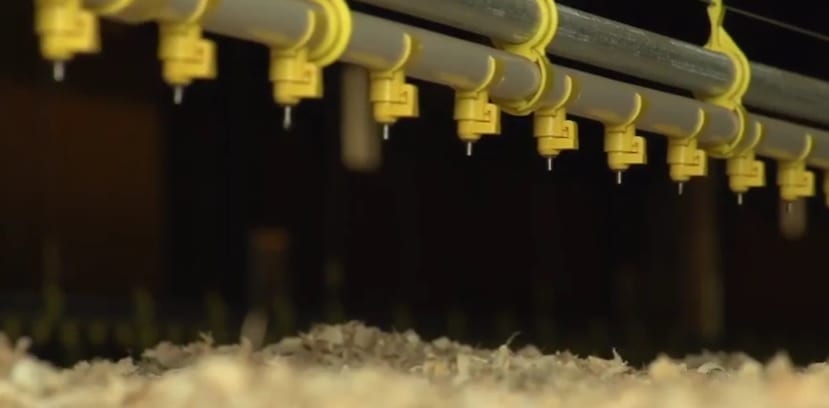
First, it’s imperative that the nipples aren’t leaky. Drinker lines should be cleaned and flushed regularly, at least once a week. Nipple drinkers have a lifespan of 5-10 years, depending on water quality. Replace your old drinkers when you notice that no amount of cleaning is fixing the leaky nipple problem.
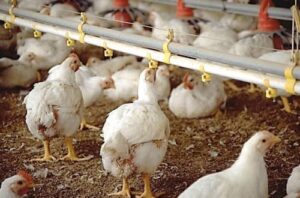
Second, the drinker line height needs to be examined and adjusted almost daily. Today’s broilers grow exceptionally fast, and you can’t afford to get behind with proper watering. The easiest way to determine if the height is suitable is to watch the birds. If they must sit to drink, it is too low. If they must stretch their necks straight up, stand on their toes, or hop, the line is too high. Here are some age guidelines to help you make appropriate adjustments:
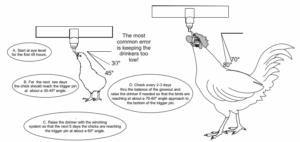
Day-old chicks – drinkers should be just above eye level. Remember to have the barn lit well enough that the chicks are drawn to the shiny metal pin, so that they learn to drink from the nipples.
2 – 3 days – raise the lines so chicks drink at a 30-45° angle.
4 – 10 days – raise lines so birds are reaching at a 60° angle.
10 days through grow out – check frequently that birds are reaching at a 70 – 80° angle towards the bottom of the trigger pin.
Want to learn more about proper chicken watering? Check out our slide show.
Want to replace your old leaky nipples with awesome new ones? Check out our website.



