
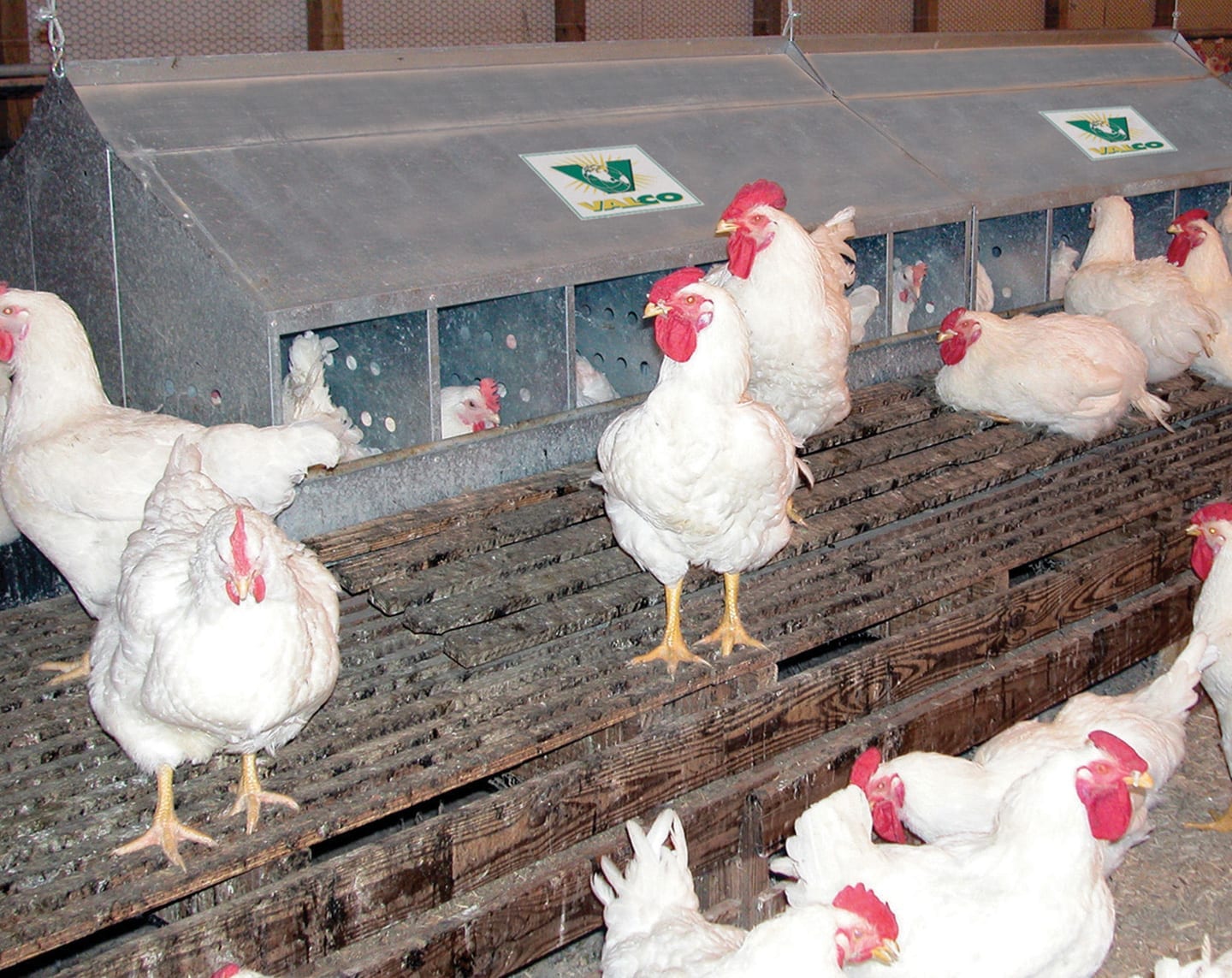
 Floor eggs are bound to happen, but too many floor eggs will require corrective action to prevent a recurring problem. Floor laying is habitual, and once it become routine, there is no way to stop it. Therefore, good nest setup and maintenance is necessary from the very beginning.
To start, you can “train” pullets during the rearing phase. By providing young birds perches to climb on, avoiding electrical wires, and maintaining a healthy body weight, the birds will learn to move and jump confidently. In turn, they will be unafraid and fully capable on jumping on to slats and nest systems once in the laying barn.
It’s good practice to move pullets into the laying barn at least 2 weeks before the onset of lay. This gives them time to adjust to their new surroundings and become accommodated with where feed is located, water is found, and lets them practice moving around the barn.
Nests should be closed until the first egg is laid. If nests are opened too early, they become a resting place rather than a nesting place. Additionally, nests should be comfortable, dark, and readily available. A hen won’t wait to lay and will choose to lay on the floor if nest space in unavailable.
Rear pullets to the correct body condition, and then maintain that proper body condition throughout lay. Hens that are overweight have a harder time climbing onto slats to the nests. Overall, maintaining good health decreases floor eggs, as disease and leg problems will also prohibit birds from reaching nest space.
Finally, keep litter levels low – one to two inches – so that little cannot be scratched into a nest. And pick up floor eggs as soon as possible. This discourages hens from “following the flock” and laying on the floor.
Remember, it only takes a hen four lays in the same spot to develop a habit. Help them develop the best habits by making the nest as appealing and available as possible.



