
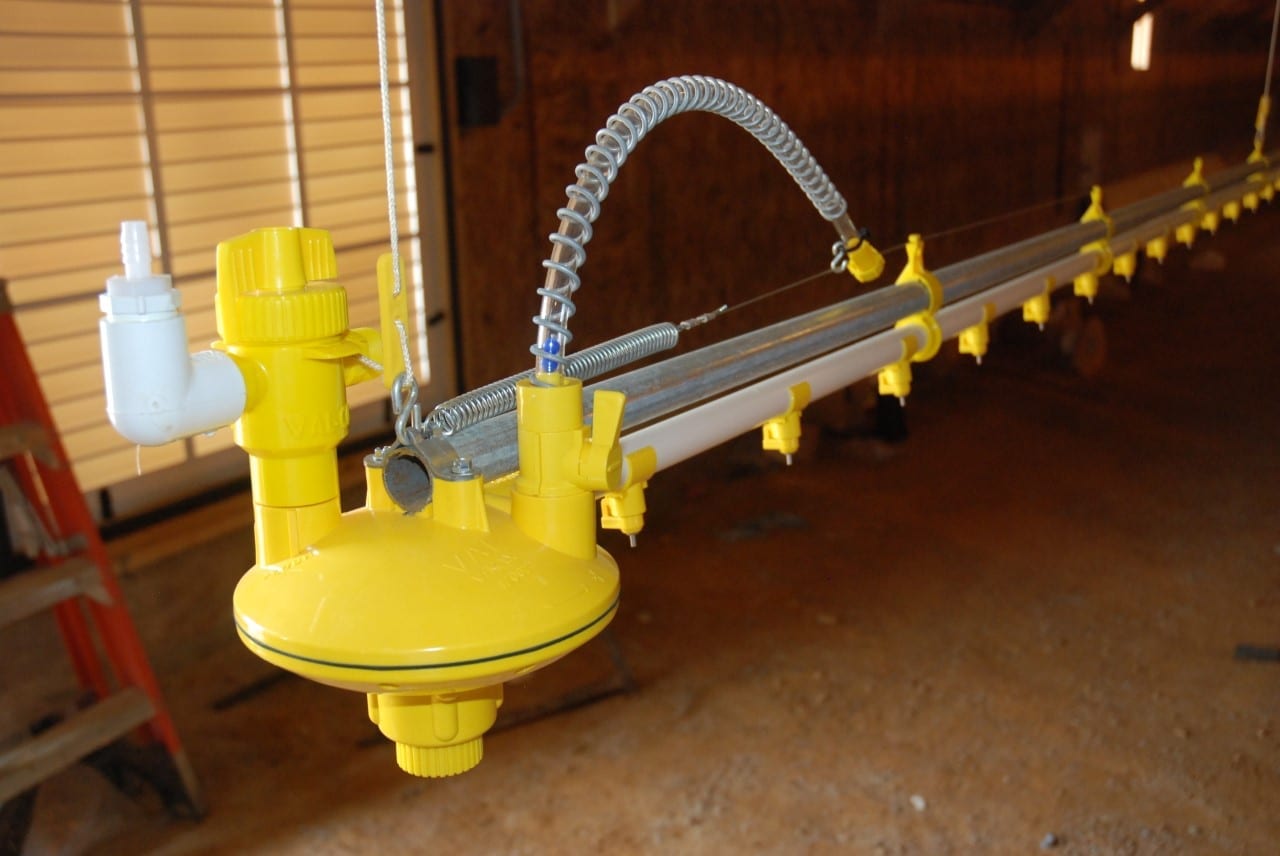
 Last week we talked about how important it is to have your drinker line at the proper height to ensure that birds can easily drink without spilling too much water on the floor. Of course this is important, but it’s not the whole picture, so this week we’re going to talk about water pressure.
Let’s keep one thing in mind: Chickens have a maximum rate at which they can consume water, and this rate changes with age.
Some simple math can determine what that rate is: [(Bird age in weeks) x 7] + 20 = Flow Rate (mL/s)
This equation creates a target sweet spot for producers where the drinker flow rate matches the beak capacity of the bird. Drinker flow rates are important to note, but the water pressure in the drinker line influences the flow rate.
Too much water pressure results in wasted water because too much water comes out when the nipple is triggered. It can also result in leaky nipples because it will inhibit the shut off mechanism from sealing properly. Too little pressure doesn’t allow the birds to drink enough, resulting in decreased performance.
As a general guideline, you should provide at least 25 psi (pounds per square inch) of pressure to the system and then adjust the regulator so that the ball height is 2-4” (5-10cm). After the second week, water pressure should be as high as possible without wetting the litter.
We’ve outline more specific guidelines to help you manage water pressure:
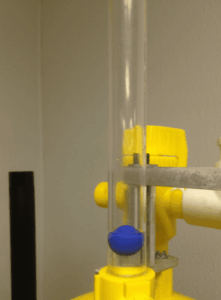
Day-old chicks: 1-2” of standpipe pressure
Day 3: raise to 3-4”
Day 5: raise to 5-6”
Continue to raise the water pressure 1-2” every other day until you notice litter conditions getting wet. Stop adjusting the pressure until the litter conditions improve (litter should be just damp enough that it clumps and then crumbles when squeezed into a ball). Once conditions have returned to normal, continue increasing the pressure 1-2” every other day until 28” is reached.
Increase the life span of the regulator by turning the pressure back to 2-4” immediately after removing the birds from the house.



