
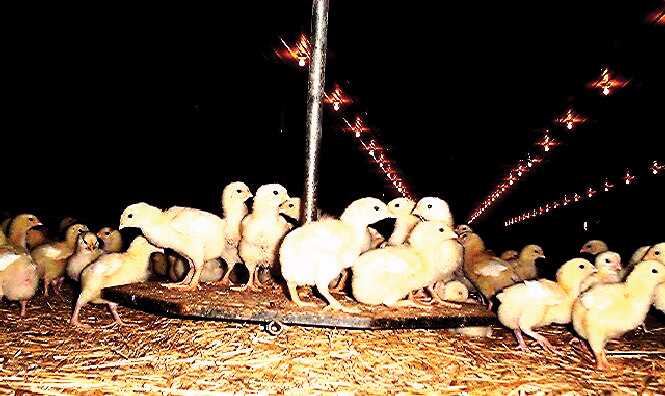
In order to know how much feed should be given to your breeder pullet or hen flocks, you need to know how much they wei gh and how quickly they are gaining weight. By frequently and accurately weighing a representative sample of your flocks, you can track uniformity and weight gains to be sure you’re on track for great performance.
Traditionally, pullets are fed on some type of skip-a-day feeding program, and are weighed on no-feed days to get a true body weight measurement. This results in the belief that the hens, who are fed daily, should be weighed in the afternoons – well after feed clean up, when stomachs and crops are empty.
Research refuted this idea after finding virtually no difference in body weights throughout the 10 hours post feed clean up. Interestingly enough, that same study did find that the last birds from the catch pen to be weighed are always the lightest. This makes a strong argument for always weighing every bird in the sample, even if that means recording more weights than necessary.
Other common best practices include weighing birds on the same day(s) each week and at the same time on each of those days. This eliminates as many variables for inconsistency as possible. Integrators have their own requirements for sample size, but it is best to weight either 5% of the flock, or at least 50 birds, whichever is greater. Weigh birds from all areas of the barn. Prior to weighing, walk the perimeter of the barn, herding birds away from the walls and feeders towards the area where they will be weighed.
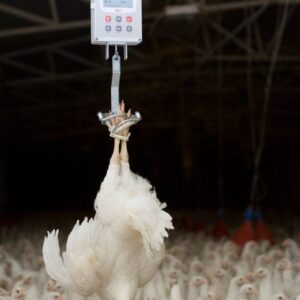 Weighing birds more than one time per week will provide rapid feedback on how feed allocations are affecting weight gains. The key is to look at how much birds gained in the past few 3-4 day periods and how much they need to gain to hit the target weight.
For pullets, weigh the chicks when they are placed. It is a good idea to weigh several chick boxes from different parts of the load to get an accurate average body weight. Remember to subtract the weight of the boxes. This will act as your baseline for tracking the chicks’ progress. Write the weights and the number of birds down on paper. It helps to have a familiar form each time so that recording the information becomes a habit. Once all the birds have been weighed, add up all the weights and divide by the total number of birds that were weighed to get the average body weight.
Use a good quality hanging or floor scale. An automatic scale platform helps gather more weights than a manual scale with zero disruption to the birds. It’s always present and always on, so dominant birds get weighed when they want to and the rest get weighed when they can.



