
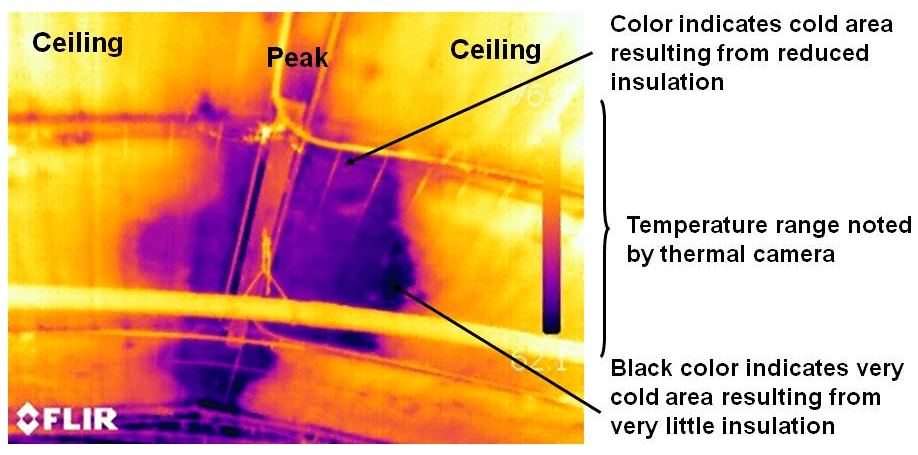
 Attic insulation is beneficial year-round, though it’s something that is often overlooked. During cold weather, hot air produced by heaters and livestock quickly rises to the ceiling. If the attic insulation is lacking, uneven, or missing entirely, that warm air will escape the barn and cause heaters to run longer and more often. With fuel prices continually on the rise, you’re just burning money.
Blown-in cellulose is the most common attic insulation, but it settles and shifts over time. The insulation tends to compact down with age and moisture exposure – up to 50% in some cases. A house that started with 5-6” of blown cellulose might have only 3” not even ten years later. The vibrations from fans and other equipment moving in the house will also cause it to shift towards the sidewalls, leaving the center of the house exposed.
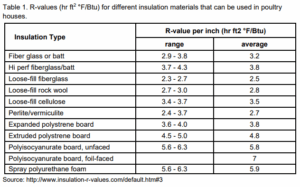
The resistance of heat exchange of insulation of measured by R-value. The ideal R-value for the attic is approximately R-20. Blown cellulose has an R-value of R-3.2 per inch, so a minimum of 6 inches are required to reach a total R-value of R-19. Fiberglass batt or blanket insulation has an R-value of R-11 for sections 4” thick, and R-19 for sections 6” thick. The fiberglass batt option has a longer life and is less susceptible to shifting and compacting, but it carries a much heftier price tag.
 Want to extend the life of your attic insulation? Here are some suggestions:
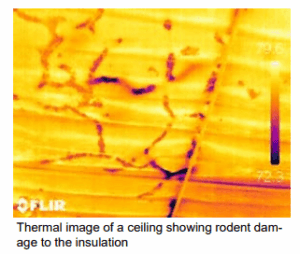
- Check the insulation yearly. Check for rodent or pest infiltration, condensation, compaction, and shifting. Filling the low spots and replacing or repairing damaged insulation is relatively simple and pays for itself in dividends.
- Add blown-over fiberglass batt to the peak. A layer of 6” fiberglass batt that overlaps the peak by two feet on each side is then blown over with cellulose insulation to prevent the cellulose from shifting or compacting in this sensitive area.
- Consider installing a vapor barrier to protect insulation from condensation that occurs in the attic when the warm air meets cold air near the eaves. The vapor barrier must be installed on the warm side of the insulation to minimize the movement of water vapor into the material.
- A wind baffle may also be an option to limit the movement of cold air into the attic. These can raise some concern where attic inlets are used.
Remember that insulation is climate-dependent – the more extreme the climate (both hot and cold) the more insulation is required. Learn more about insulating livestock houses here (while targeted at poultry producers, many principles will also apply to swine housing).



