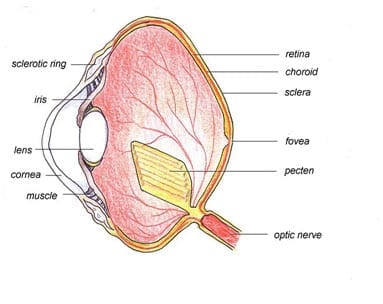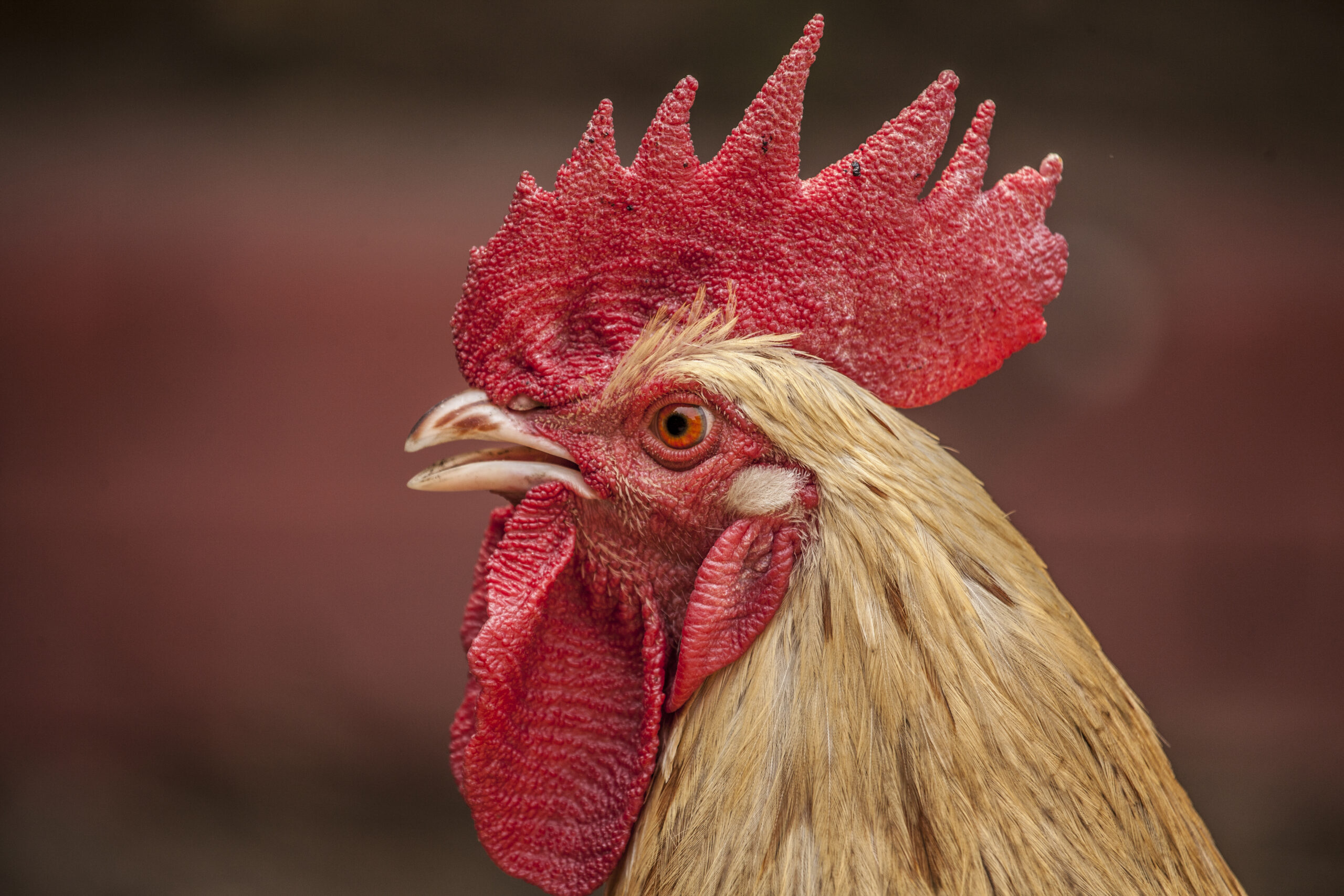
Whether in commercial flocks or backyard coops, chickens are endlessly fascinating. While we might never understand what all those quirky head nods mean, we can get a better sense of how chickens see the world with these 10 interesting facts about chicken vision.
- A chicken’s eyes are about 10% the entire mass of its head.
- Chickens can see 300 degrees around because their eyes are in the sides of their heads.
- Chickens are tetrachromatic. They have 4 types of cones that let them see red, blue, and green light, as well as ultraviolet light. Therefore, they see many more colors and shades than we do.
- Chickens have an additional double-cone structure that helps them to track movement.
- Because their eyes are so sensitive, they can see tiny light fluctuations that are imperceptible to humans. Fluorescent lighting to chickens is like strobe lighting to us, so they often become irritable under these lights.

- Chickens can sense the presence or absence of light through the pineal gland in their head, so even an entirely blind bird can still sense daylight or seasonal change.
- Chickens have a third eyelid called the nictating membrane that slides horizontally over the eye to protect it from dust and debris.
- Chickens can use each eye independently on different tasks simultaneously.
- Chickens have mono-vision. The left eye is far sighted, and right is near sighted. This is the result of turning themselves in the egg so that the right eye is exposed to light through the shell, while the left is not, because it’s directed toward the body.
- Chickens have terrible night vision because they evolved from dinosaurs instead of around dinosaurs, and essentially never spent millennia hiding in the dark.