
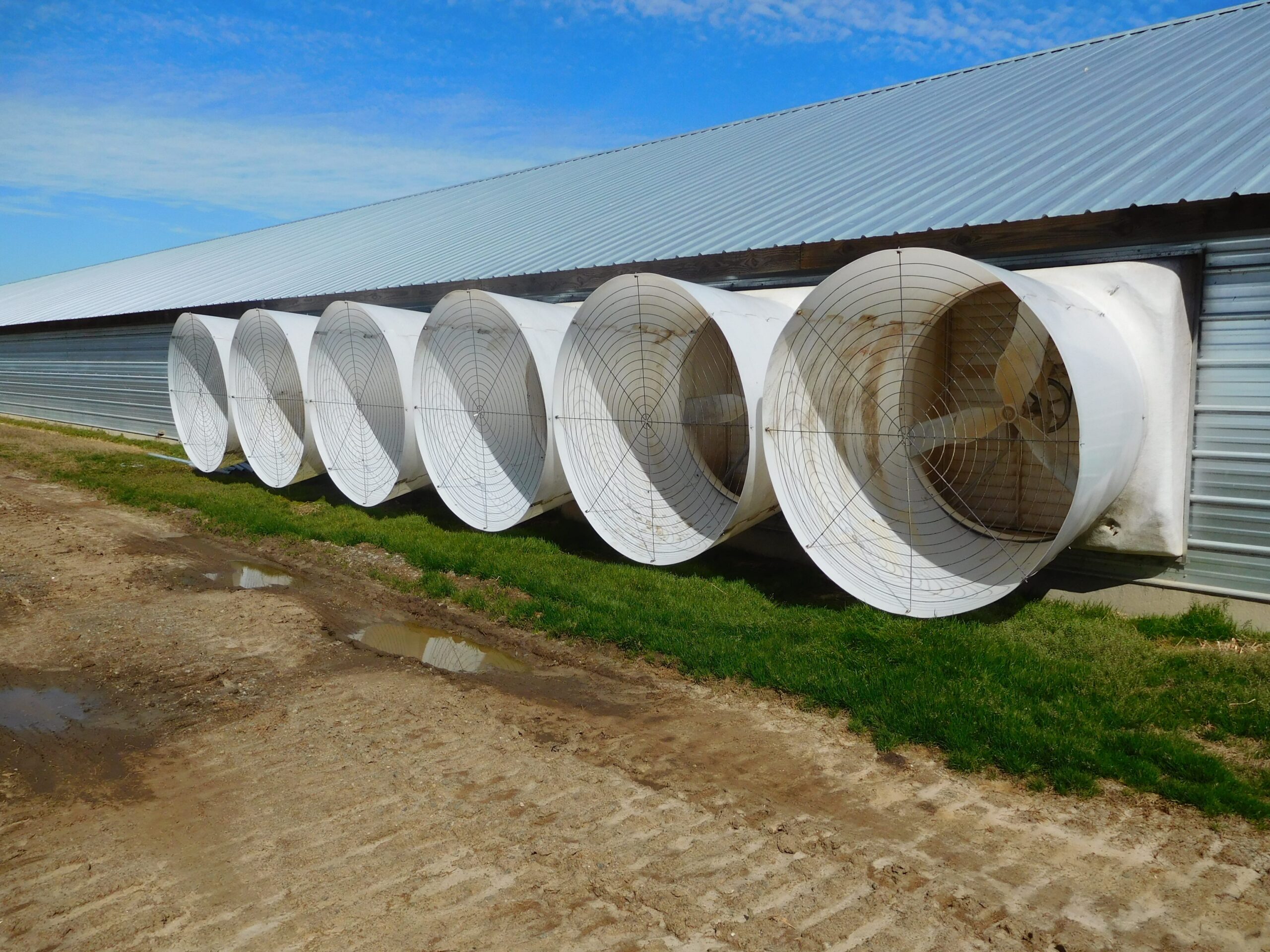
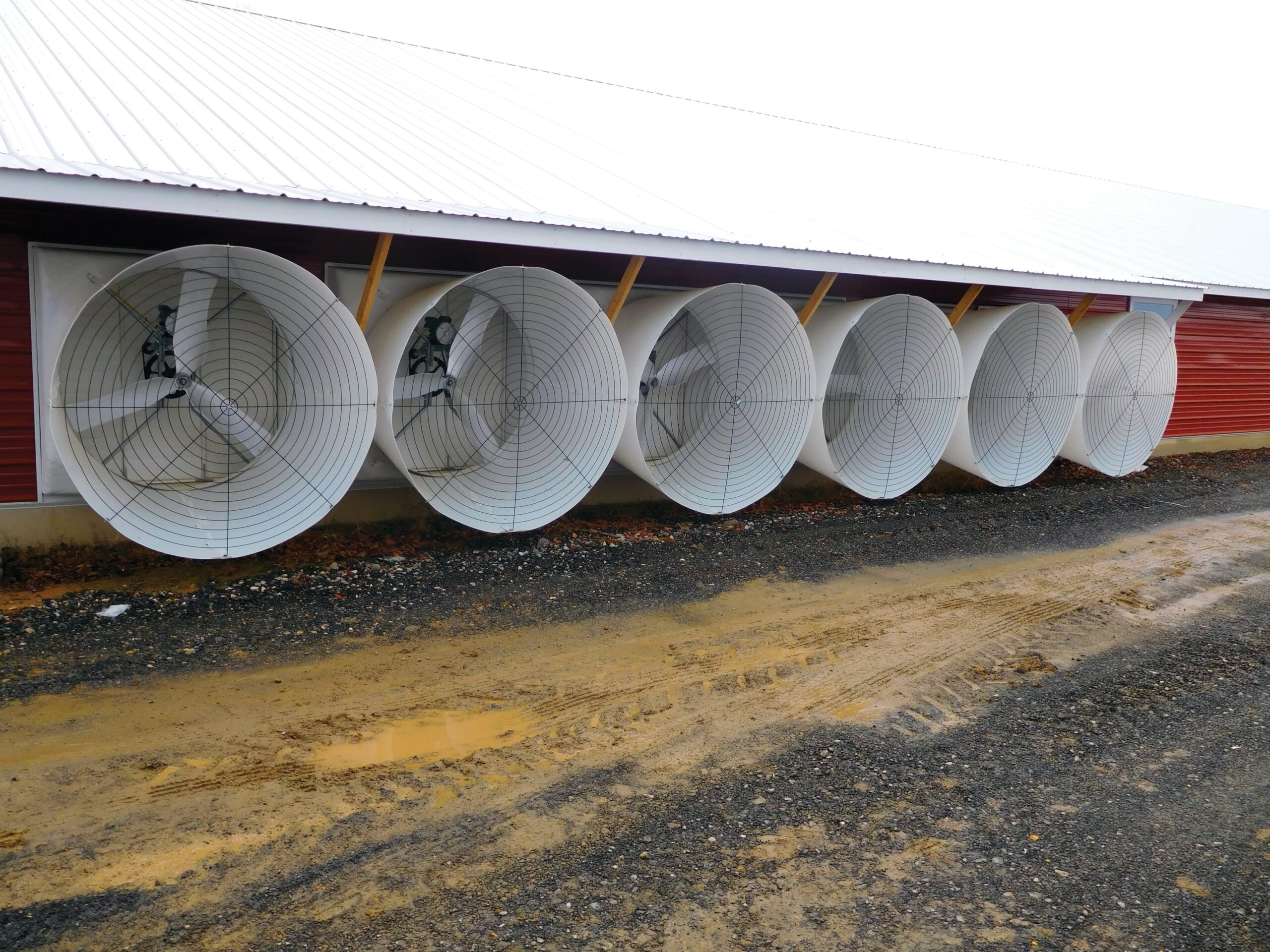
 The transitional seasons for ventilation are typically Spring and Fall. These seasons are normally where you are going to have the most fluctuation in temperature making it difficult for growers to ventilate properly. Whether you are transitioning from minimum to full ventilation, or full to minimum ventilation, it is important to regulate temperature changes gradually. This is extremely important with young birds.
Transitioning in to Summer Ventilation
There are a couple things to consider when increasing ventilation rates to ensure that your barn is ready for hot summer temperatures. If you have latches on some of your sidewall inlets (that were not in use during minimum ventilation), remove them so sidewall inlets can operate properly. If you have weather covers on your tunnel fans, remove them so when that fan kicks on, you are getting the appropriate air flow. Complete all maintenance and tunnel fans before entering tunnel ventilation. If running a pullet house or light controlled breeder house, clean/blow out your light traps before entering tunnel ventilation. If light traps are dirty, they will create excess static pressure causing fans to work harder, decreasing ventilation rates and efficiency.
Transitioning out of Summer Ventilation.
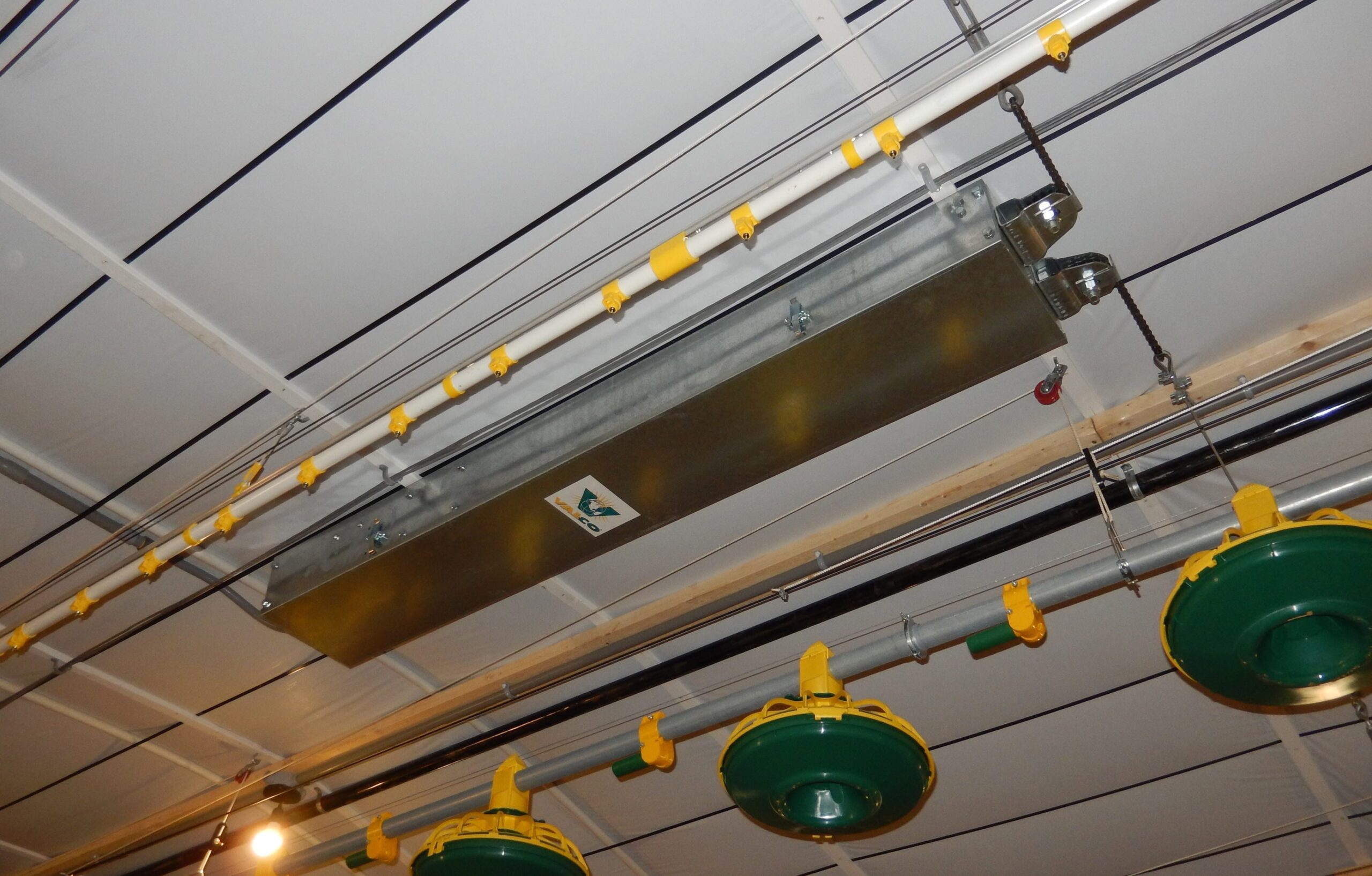 As the summer months come to an end, so do the high temperatures. When transitioning out of summer ventilation, it is important to monitor flock behavior to make sure the birds are comfortable. Running too high of ventilation rate can cause a wind chill cooling effect on birds, causing them to consume more food, thus increasing productions costs. Running too low of a ventilation rate can cause the birds to be heat stressed. Visually check birds for panting – a sign of heat stress that indicates birds that are not receiving the proper ventilation rate.
Ventilation rates vary depending on the age of the birds, type of birds and what time of year they go into the barn. Check that the override thermostats are set correctly for the age of the bird when transitioning out of full summer ventilation. Change the thermostat overrides as birds age. Override set points are usually around 98 degrees for day old chicks, but for older heavier birds, thermostat temps may be closer to 80-82 degrees.
Some points to consider when entering decreased ventilation rates:
- Make sure heaters are not manually turned off at the controller. Some growers turn them off manually during the summer months knowing they are not going to use them.
- Leakage is a major concern with decreased ventilation rates. Make sure the barn is still airtight.
- Inspect side wall inlets – Over time cables can stretch so readjusting home run lines and settings actuators correctly can have a positive effect on sealing off your barn.
- If using curtains – Be sure you perform a controller curtain exercise routine to actuate the curtain periodically and help eliminate any rodent nests and damage to the curtains.
Ultimately, having a strong maintenance plan and properly working ventilation system is the key to any successfully run Production Barn.



