
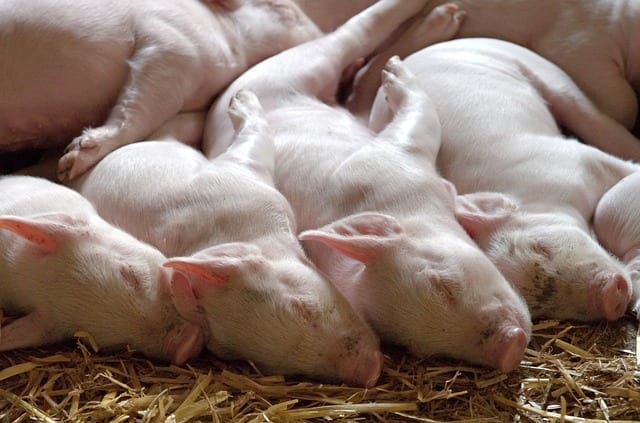
 Pig handlers should understand pig behaviors to move pigs with as little stress as possible. Most pig behavior can be attributed to natural instincts. Pigs are herd animals and find being isolated from the group stressful. They have a strong tendency to follow each other while maintaining visual and bodily contact and prefer to be moved in small groups. And because of their poor eyesight, they balk at moving into dimly lit areas, and will more easily move into well-lit ones.
Handlers should understand a pig’s flight zone, their point of balance, and how their senses inform their behavior.
Flight Zone
The flight zone is the area around the pig that it considers its individual space. This safe space will vary from pig to pig and situation to situation. The space can become smaller with regular, positive handler interactions.
Point of Balance
A pig will use its point of balance to determine which way to move away from the handler, as long as it has the space to do so. Usually, this point of balance is near the pig’s shoulder, but this is prone to changing. Handlers should avoid standing in front of a pig while encouraging it to move forward. Not showing a clear path but demanding movement results in a stressful situation, and may cause the pig to act out of fear.
Senses
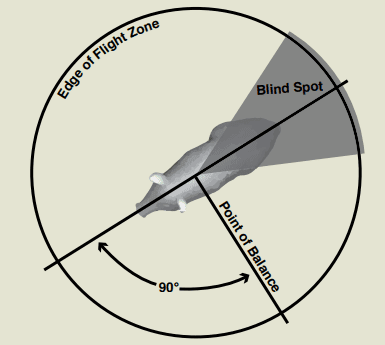 Pigs situate themselves in their surroundings using their senses of hearing and smell. The sense of sight acts as a complement; the eyes, located on the sides of the head, give them poor depth perception directly in front of them, but allows pigs to see approximately 310 degrees around themselves with a blind spot just directly behind them. Pigs will try to keep handlers out of their blind spots and will stop and listen for any potential threats, so work slowly and use patience when moving pigs.
Herd behavior, additional people, a handlers’ use of tools, and environmental influences change how a pig responds to pressure. Handlers should be familiar with swine body language so that they can calmly adjust their own position and respond to the pig’s emotions.
Check out the PQA+ Handbook for more info.
Want to become PQA+ or TQA certified? Find a trainer here.



