
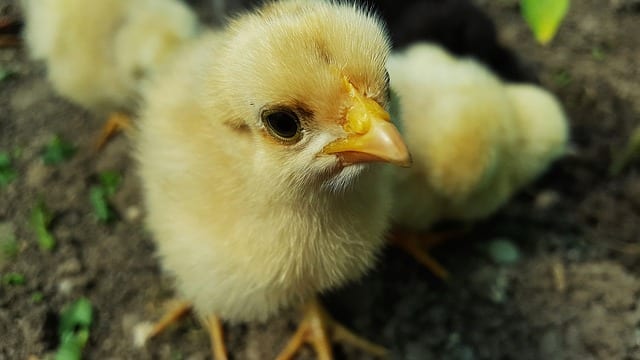
Four important factors play into a successful brooding period. Temperature, air quality, water, and feed are all necessary to give baby birds the best jump start in life. It’s easy to focus too much on temperature, after all, day old chicks lack the ability to maintain their body temperature on their own. But the modern-day broiler is a born and bred eating machine. And so, focusing on developing a healthy appetite is key to a young broiler’s success.
Appetite development is imperative in the first few days of a chicken’s life. Sufficient key nutrients are required to develop all of the systems of the body, and the yolk can only provide so much.
A day-old chick is nutritionally self-sufficient thanks to the carbohydrates, proteins, and fats found in the yolk sac. A top priority during brooding is to introduce and transition chicks to feed within 72-96 hours of hatch.
Chicks have an instinctive natural packing behavior, so they seek out particles on the floor that are large enough to cast a shadow. If the brooding area has been properly prepared, they will find the feed and water. Once the crop is filled – about 30 hours after feed is consumed – the digestive procedure will stimulate the appetite center of the brain.
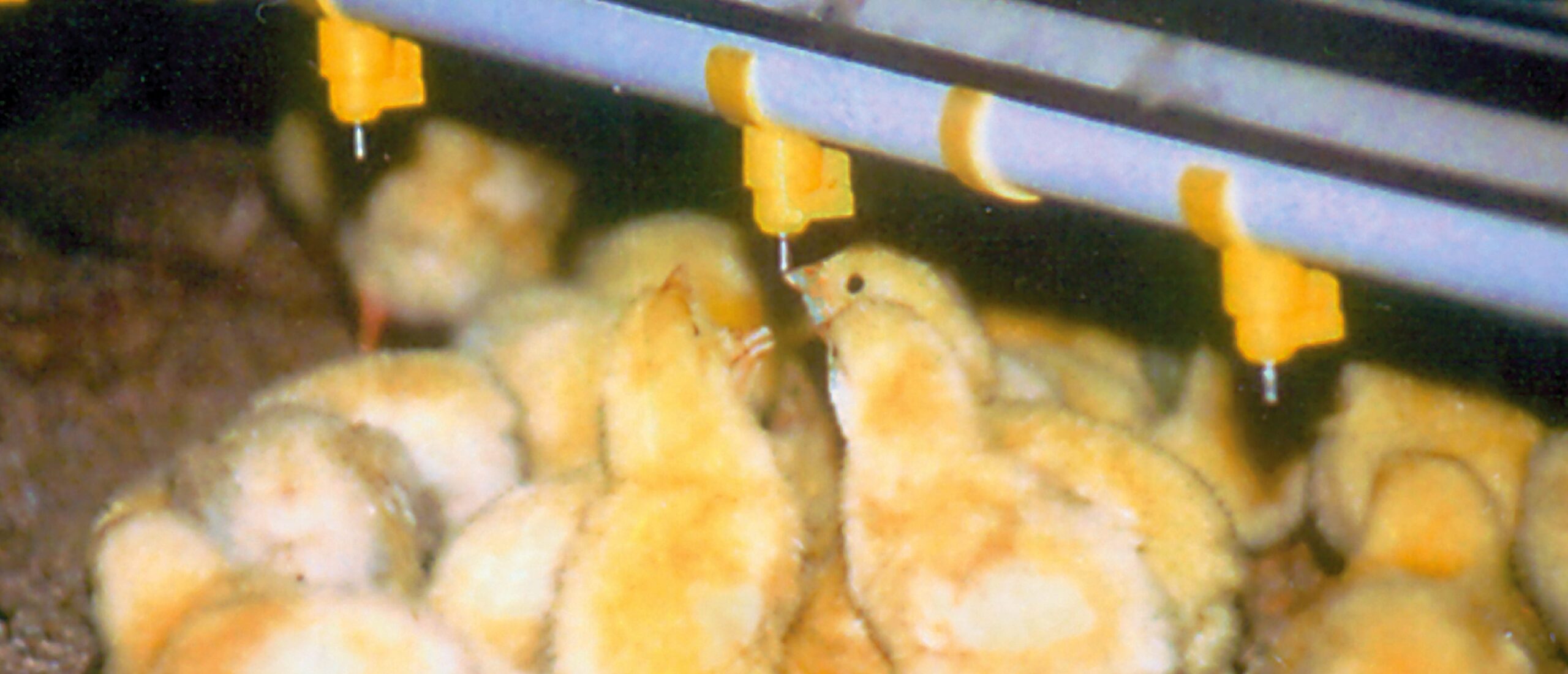 Because feed consumption and water consumption are linked, birds must have easy access to both. It’s ideal that every bird should consume 24 ml of water within the first 24 hours of life, or roughly 40-50% of its own body weight.
To maximize interest in the feed:
- A minimum of the 50% of the floor area should be covered with food – 75g per chick.
- Use trays, paper, or feeders to have the food spread evenly around the brooding area.
- One tray per 50 chicks
- Paper near water lines to reduce travel distance
- Provide free access to clean water – digestion cannot occur without it.
More info on appetite development, click here.
For more about successful brooding, click here.



