
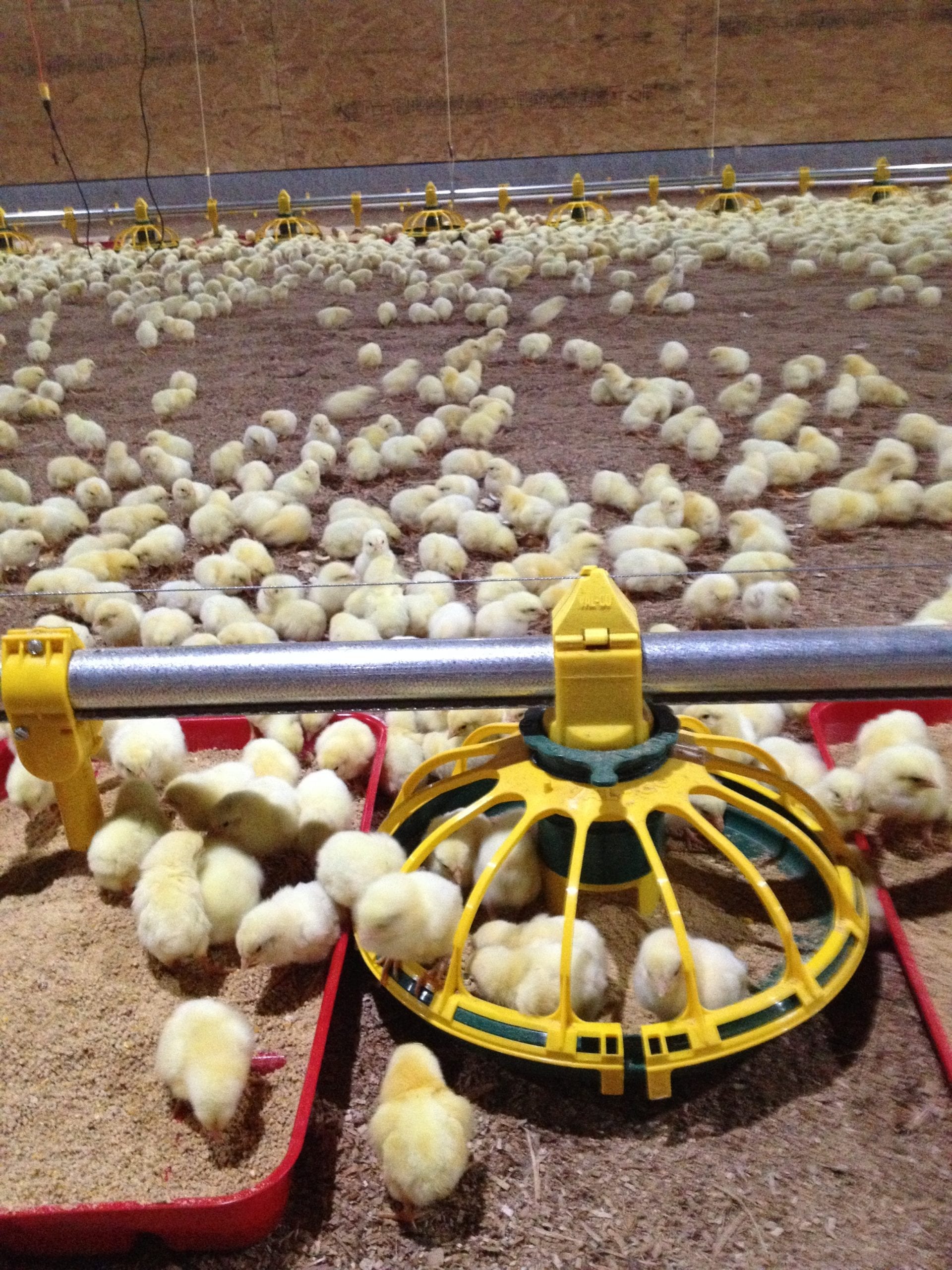
Tips for Chicks
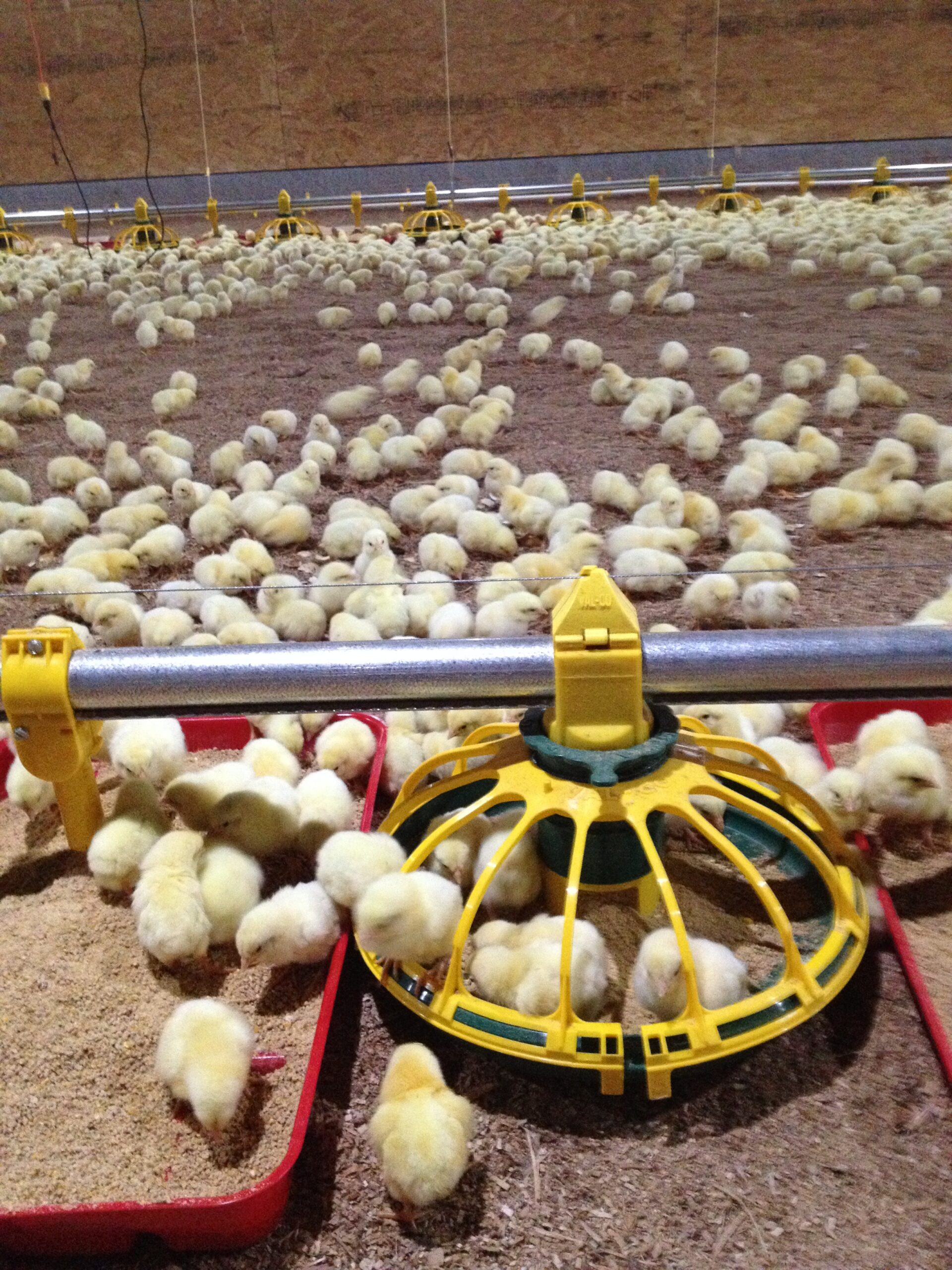
As many of you know, preparing for your next flock of chicks is crucial to the flock’s performance. Many growers will state that the time spent during this time out is where the “hard work” of growing birds is at. Below are tips to get your chicks off to a great start.
- Litter Preparation:
- Your litter condition will help keep birds comfortable when they arrive to the farm. Optimal litter prep keeps ammonia levels as low as possible. Windrow or use a crusting machine/ Use an approved ammonia suppression product. By preparing your litter the best you can, you can use minimal fan time and avoid over ventilating the chicks.
- A minimum of 4 inches of dry litter from front to back of the house is suggested. As you preheat the house, the heat will stay in the litter to ensure great brood temps. A good litter base also acts as a sponge to soak up moisture and prevent wet floors.
- Do your best to level litter throughout the house, as this will keep you from having high and low spots with your feeding and watering equipment.
- Feed & Water Lines:
- While lowering your feeding and watering equipment back down, inspect for any maintenance issues such as winching issues or even damage that was missed from when live haul came in.
- Once you start to run your feed for the new flock, make sure that all pans are flooding properly and are level. A good rule of thumb for feed trays for chicks is 1 tray per 100 chicks, but always adhere to your company guidelines.
- Always flush all drinker lines before the new flock comes in. Make sure all nipples have been triggered; some can get stuck and the chicks will not be able to use them properly.
- Always level water lines after chicks arrived so they are level to the actual bird size. Make sure the water in the lines has a chance to warm up before birds arrive.
- Heat:
- Make sure all heating equipment is working properly as this is the “Mother Hen” for the chicks. They are cold blooded animals when born and 100% rely on the heat you provide them.
- Floors should be warmed to 90-95°F/32-35°C.
- Fans:
- Make sure all fans are clean, and that belts and motors are in optimal working order.
- Alarms:
- One precaution I learned in my years in Live Production is that it is good practice to set your alarms during pre-heat to ensure that all heating equipment and minimum ventilation is working properly before chicks arrive.



