
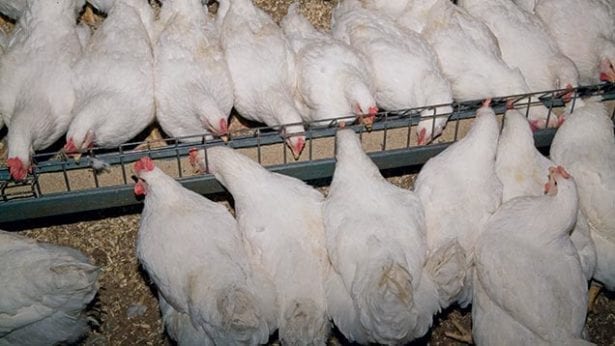
 Today’s broilers grow so rapidly because of a genetic predisposition to accelerated growth rates which are supported by a nearly insatiable appetite. Plain English? They were bred to eat a lot. It’s a great characteristic for meat stock – we can produce a large amount of lean meat in a small amount of time, usually about 6 weeks. The ability to rapidly gain weight is not, however, such a desirable trait in breeding stock, who, naturally, share similar characteristics.
If breeder hen pullets were fed a standard diet, a typical corn-soybean meal fed ad libitum, they would reach ideal reproductive weight at approximately 6 weeks. However, they do not, at this age, possess the necessary maturation to properly respond to light cues that induce the beginning of lay. This does not happen until approximately 20 weeks of age. If the pullets were to still be fed at the same rate for the remaining 14 weeks, they would be too large to properly procreate; egg production and viability would not be sufficient to support the necessary stock for the broiler houses.
How do we make sure breeder hens lay the most fertile, viable eggs?
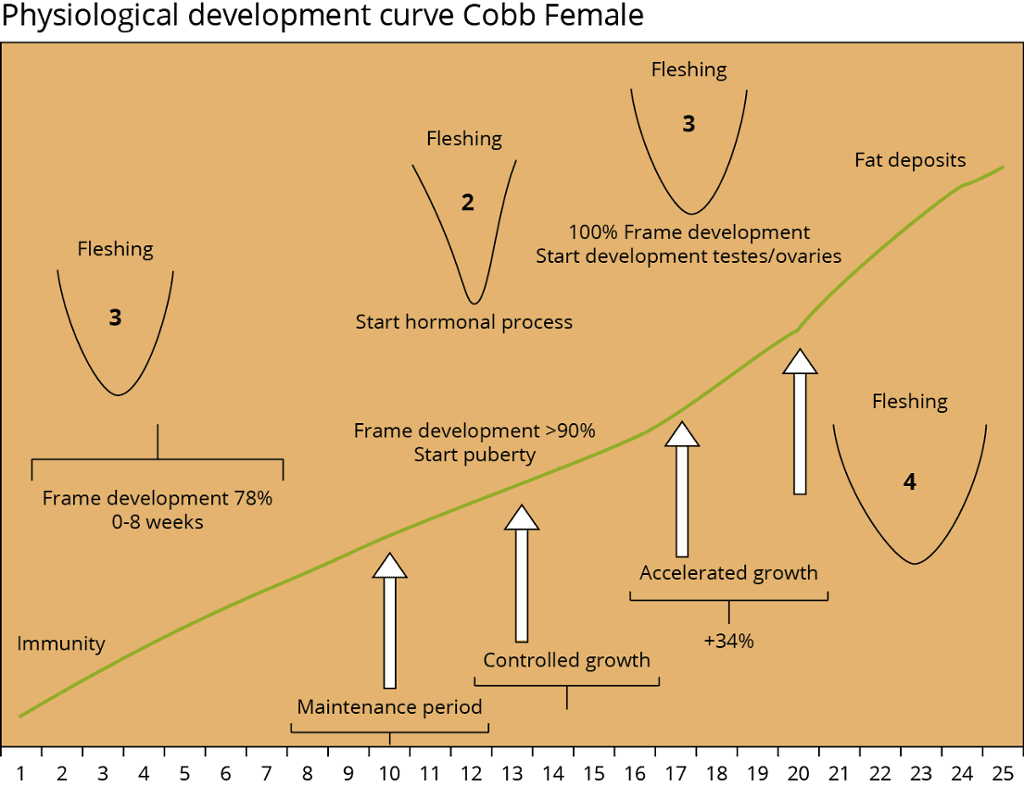
We control the only variable that we can… feed intake. By 20 weeks, birds should almost simultaneously develop the proper bone strength, reach their ideal fleshing (fat) level, become sensitive to light stimulation. By controlling their diet, we can control how quickly weight is gained and help the birds reach ideal body conformation. Diet is commonly restricted to 70-80% of what birds consume ad libitum. Whether that diet is restricted via volume or feed quality is producer preference, but most choose to follow a skip-a-day feeding regimen.
Skip-a-day feeding allows 2 days’ worth of food to be given at once, using all the available feeder space so every bird gets a chance to eat her fill. This reduces competition amongst birds and results in better flock uniformity.
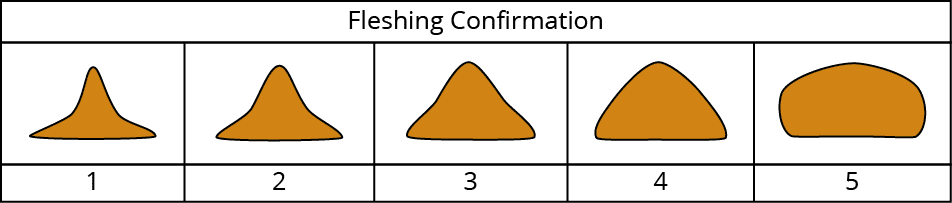
In reproduction, the response to light happens only when birds are at the appropriate fleshing levels. At 12 weeks, the frame size (bone development) is nearly complete. From this point on, the fleshing (body condition) should gradually increase. How do you know if the birds have the right fleshing? You have to handle them.
Fleshing is an indication of how much muscle is developed on the breast and wings. From this, fat deposits should increase gradually up to and during the onset of lay. To make sure that fleshing is on track, the birds should be handled at 12, 16, 19, and 21 weeks of age, then adjust feed as needed. Overweight birds should be kept consistently overweight at each mark (if 100g over at 16 weeks, should also be 100g over at 20 weeks), but underweight birds should be attended to so that they gain more weight.
Raising breeder hens presents a whole slew of challenges, and no one thing will guarantee that your hens perform their best. A good poultry man is concerned with the health and well-being of the flock, and this includes a broad view of the life of the bird. For more information about the hens’ reproductive journey, check out this article.



