
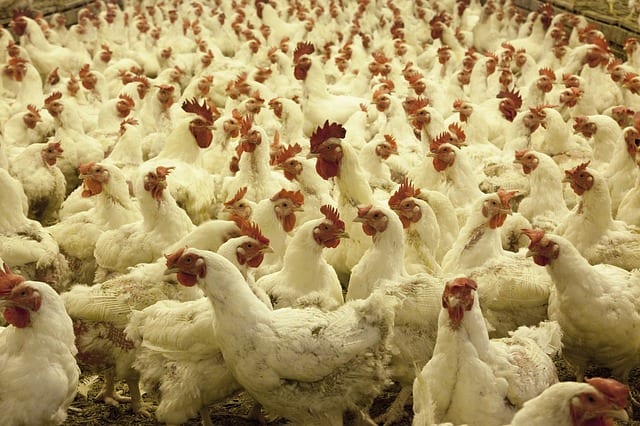
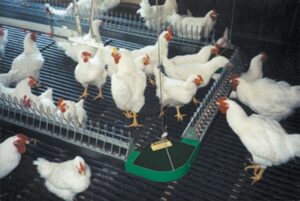
Flock uniformity is crucial to good performance in a breeder flock. It starts with what and how much a bird eats each day – assuming the feed contains all the proper nutrients, we should focus on delivering the nutrients to each bird equally. A flock uniform in size comes into production better, peaks higher, and persists better.
There are two main causes of poor flock uniformity: inadequate feeder space, and poor feed distribution.
Aggressive eating behaviors are learned. If there is not enough space, more aggressive birds will push more timid ones aside. Consequently, the timid birds don’t gain enough weight, and the aggressive ones might gain too much.
Combat these issues in three simple steps:
1. Make sure there are enough feeders for every bird to find a place to eat.
2. When filling the feeders, do so as quickly as possible so that the birds do not have a chance to crowd or pile on to each other. Filling feeders out of sight of the birds, either in the dark or when raised, gets feed in front of the birds when lights come on. Use auxiliary hoppers to get feed out faster – 2 minutes should be the maximum amount of time it takes to get in front of all birds.
3. Grading breeders, ideally before they are 28 days old, can help create a more uniform flock in the long run. By grouping birds of a similar frame size together, you can adjust their rations and feed exposure to slowly bring larger and smaller bird groups towards the median.
Implementing these practices early on can improve uniformity and performance. Birds will learn to eat more slowly, extending feeding time, and allowing all birds ample time to get the nutrients they require.
How do you know if the birds are on track?
Frequent, accurate weighing – an Alberta study weighed birds two times per week from placement to 32 weeks, after which it did so weekly. This required extra labor, but paid off in accuracy by highlighting the progress made through the flock.
Understand and react to body weight gains – knowing what the birds have gained and what needs to be gained can help you make strategic feed allocation decisions.
An automatic feeding system is only as effective as the person monitoring it. Always check that the feed is evenly distributed throughout the system, that every bird has a place to eat, and that the groups are coming together to meet the target weight.



