
 Feeding breeder hens can be tricky. You have to hit target weights, but can’t let the birds grow too fast or get too big. You already know that raising a consistent flock is imperative to success, but how do you maintain that once the birds are moved to the laying house?
- Have a plan
- Have a plan to feed the hens in their new environment. Pullet service techs and hen service techs should collaborate on the initial post-transfer feeding plan, and you should have a long-term plan to manage weight gain throughout egg production.
- Make sure hens find feed and water
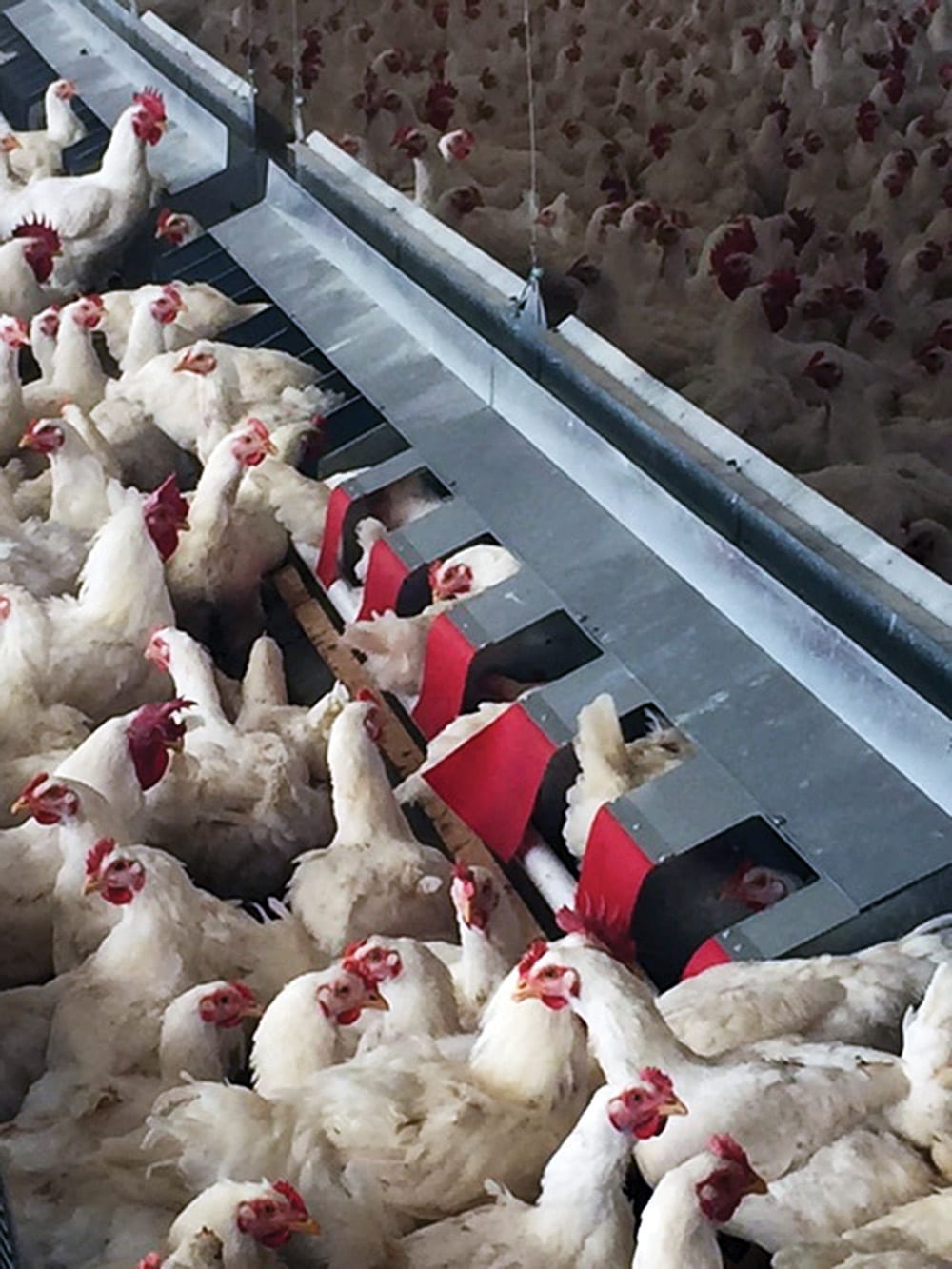
- The first 21 days post-transfer are critical, so it’s imperative that hens find feed and water right away. Be present at feeding time. Help birds locate feed and water on the slats; place them there if necessary. Check that feed is evenly distributed and all systems are working properly. Ensure clean and adequate water supply.
- Adequate feeder space will reduce chaos and competition. In turn, it’ll improve feeding ability, body conformation, weight gains, and feed efficiency, all leading to better production.
- Recommendations for feeder space vary by breed and integrator, but range from 4” of trough space per hen up to 7”. Too little or too much will both adversely affect flock uniformity and, consequently, fertility.
- Run ventilation during feeding
- Birds gathered around feeders paired with the consumption and digestion of food can cause them to overheat and become stressed. Increasing air flow during feeding time will help to offset this effect.
Be sure that you are within the primary breeder guide recommended target body weights. Use accurate and frequent weighing to know where the bird weights are currently, compared to where they need to be. Track body weight gains to identify trends that will help you make adjustments to hit your goals.
Remember, nutrient levels in feed, changing egg production rates, and temperature fluctuations will all effect the growth curve of your flocks, and must be analyzed when measuring and analyzing data.



