
Pigs are made up of almost 70% water. Too much of a decrease in that water balance means that your pigs won’t be able to digest food properly, leaving them malnourished, underweight, and susceptible to disease. 
Dehydration is often a symptom of any kind of stress, usually stemming from critical points in production. While heat stress is a common factor, dehydration can happen any time.
Common Stressors:
- Weaning stress
- Illness
- Heat stress
- Vaccinations or other treatments
- Transport
Only 51% of newly weaned piglets consume water within the first 25 hours post-wean. That means almost half of every weaned group is dehydrated.
Signs of Dehydration:
- Piglet is thin and bony
- Animal urinates or defecates less frequently
- Dry nose
- Sunken eyes
- Rough hair coat
- Fails skin pinch test (pinched fold remains elevated more than a few seconds)
- Diarrhea can quickly lead to dehydration. Over a long-term period, the upset gut health can lead to nutrient absorption problems.
Treating dehydration can be as simple as providing enough water that the pigs feel they can drink at any time without fighting for space. In more severe cases, veterinary intervention may be necessary, but by being aware of the piglets’ behavior, this can be avoided.
Treating Dehydration:
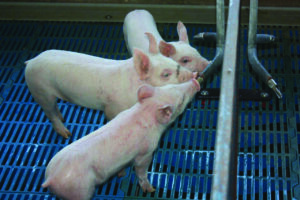
- Provide adequate water space and flow
- The target is for the pig to drink about a gallon per day – less for younger pigs, more for finishers. Breeding stock usually consume 4-6 gallons per day, depending on stage of reproduction.
- Provide enough waterers
- Use good quality water – have it checked and treated if you’re unsure
- Flow rate should be at least 1 pint per minute in the nursery and 1 quart per minute in the finishing house
- Provide support at wean
- Add electrolytes to the water through a medicator and use palatable starter feeds.
- Electrolytes contain important nutrients and sugars that encourage piglets to drink more frequently, balances the gut flora, and improves appetite.
- Provide support during illnesses
- If dehydration is caused by diarrhea, supplying electrolytes will help replenish the gut flora balance that is lost.
And always make sure your drinkers are in good working order!



