
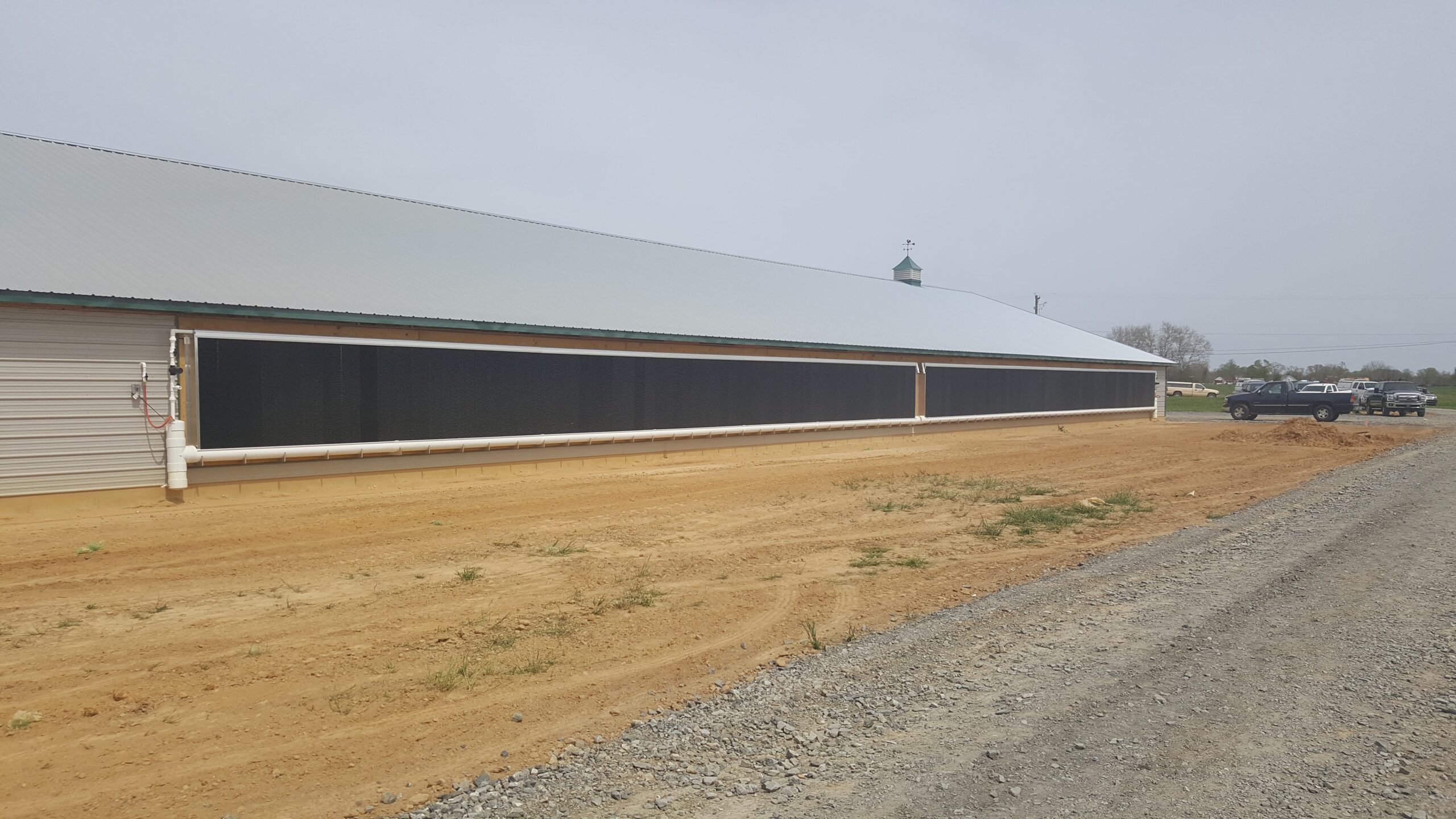
Summer time heat. Everyone’s least favorite seasonal challenge. If only cooling the poultry farm was as easy as cooling our homes. Alas, there are very few barns where you can close up the windows and blast the A/C, but most barns can garner a few degrees of relief thanks to evaporative cooling systems.
Pad cooling systems are not the only evaporative cooling option, but they are the most popular. The idea is simple: Water soaks the pad, then the air is pulled through the wet pad, cooling as it passes through, and replaces the hot air in the barn that’s been expelled by the fans.
The system is so simple that, unfortunately, we tend to forget about regular maintenance chores to keep it running at peak performance. Algae build up, clogged distribution pipes, and dirty water can all have a detrimental effect on the system’s ability to cool incoming air. Below, we offer some advice on caring for your pad cooling system.
Avoid algae
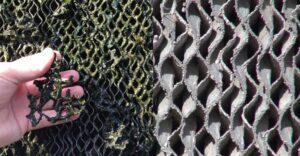
Algae growth can lead to clogged pads, which can reduce cooling and shorten the life of the pad. To avoid algae, don’t let the pad sit in water. Clean sumps and pumps several times over the course of the summer to prevent algae growth and sediment clogging. Allow pads to dry out completely at least once every 24 hours. Add shade to minimize direct sunlight on the pads.
Check for even water distribution
Dry areas on the pad result in hot air entering the barn and are a dead giveaway that the distribution pipe is clogged. The pipe can be clogged with debris or scale build up from poor quality water being used. Control scale build up with additives if needed and always follow manufacturer recommendations. Bleed off at least 5% of the water weekly to prevent buildup of salts and calcium. Remember that as the water evaporates, all the minerals are left behind to stick to your pad and clog your pipes.
Cleaning your evaporative cooling system
- Remove pads from system
- Inspect for damage like wear or rodent nests
- Rinse dirt and debris from both sides
- Use a garden hose and nozzle. DO NOT high-pressure wash
- Clean pad framing
- Remove debris and cobwebs. High-pressure washing ok.
- Clean gutters
- Remove debris from sump
- Use shop vac or trash pump
- Clean filters
- Refill system with clean water and turn on
- Flush distribution pipe
- Unclog any plugged holes (stiff wire or small screw driver works well)
- Flush pipe again
- Replace pads back into system



