
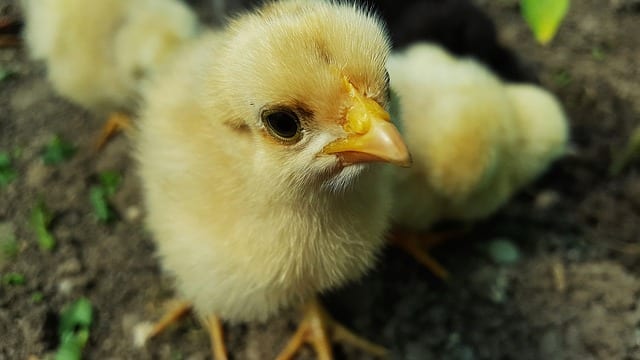
If you haven’t seen it already, the Chicken Farmers of Ontario recently released a short video detailing some Best Management Practices of broiler brooding. Throughout the video, Dr. Scott Gillingham stresses the importance of stockmanship, biosecurity, and attention to detail. We’ll summarize some of his main points below, but strongly encourage you to check out the video here or watch it out below.
Bioseguridad
It’s of first and foremost importance. Practice biosecurity at every step to limit disease introduction or spread through the farm. Personnel can never be too careful – wear coveralls, gloves, boots and hair nets, and have everyone follow the same protocol.
Audit yourself
“Write down what you do. Do what you write down. And prove it.” Auditing keeps you accountable to yourself and to your birds.
Recommendations
Follow the acronym FLAWSS – Food, Lighting, Air, Water, Space and Sanitation
Evaluate these aspects of the barn often. Check the birds and use their behavior as an indicator on what can be improved, and make the proper adjustments. You’re the mother hen now, be broody!
Food:
- 40-50 grams of feed per chick should be available at placement.
- There should be a consistent feed texture – they have little beaks, and prefer a crumb with a 2-3mm particle size.
Lighting:
- Use no less than 20 lux for the first 3 days to help birds find feed and water.
- Allow for a dark period (not necessarily pitch black, but dim). This allows chicks time to sleep and develop 24 hour cycles that will in turn support their immune function, growth, and digestion.
Air:
- Use sensors to check the carbon dioxide and humidity levels.
- Carbon dioxide levels should be kept below 5,000ppm, and ideally below 3,500ppm in the US. In the EU, the standard for poultry houses is < 2,500ppm.
Water:
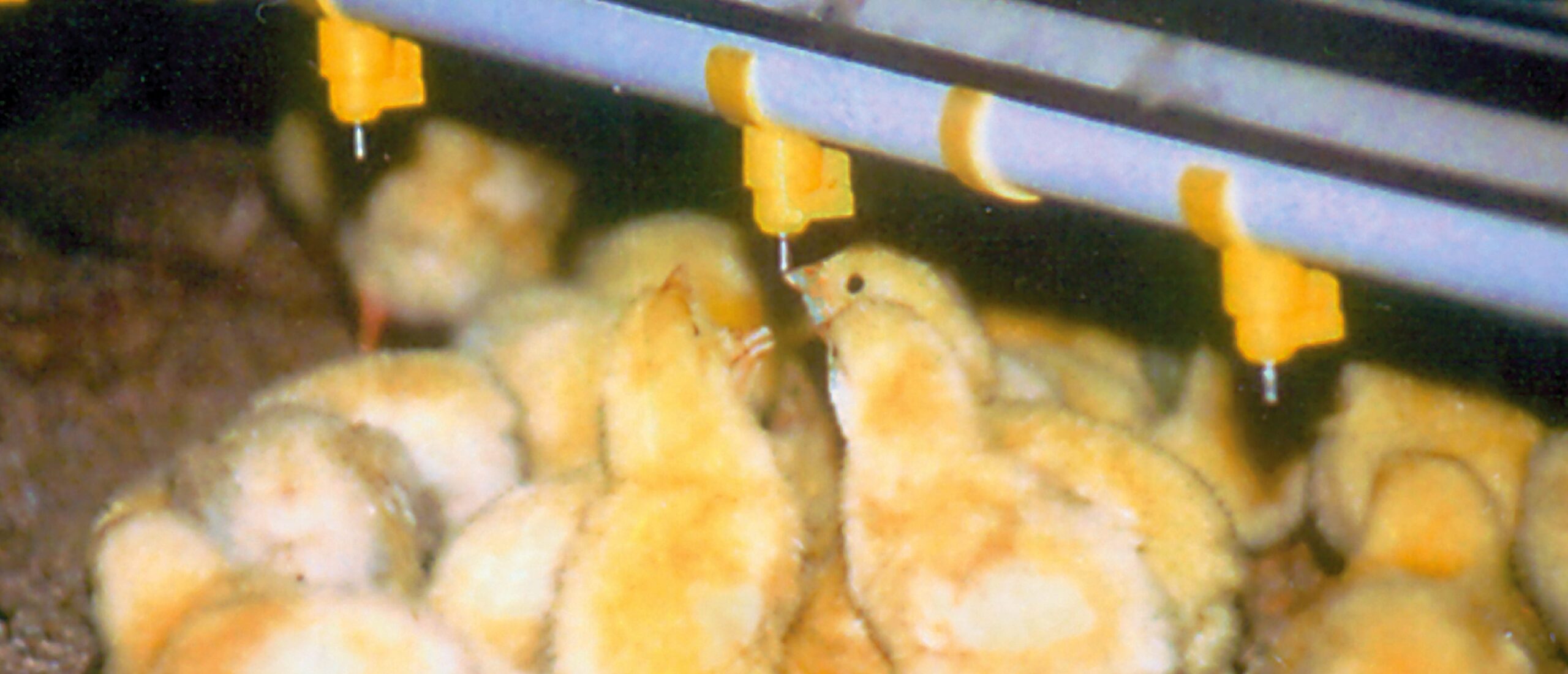
- There should be 20-30 chicks per nipple during the brooding stage (this could vary depending on manufacturer).
- Flush the lines a few hours before placement to remove air pockets and place droplet at eye height.
- Ideal intake is 1ml/bird/hour for the first 24hrs.
Space & Sanitation:
- House is cleaned and sanitized before placement to kill pathogens from other flocks.
- Houses have been warmed to 90°F at floor height.
- There is enough space in the brood chamber for the birds to move around and thermoregulate.
- The heat, humidity, and lighting all work together to get the birds to the food and water.
Dr. Gillingham also discusses the importance of weighing the chicks, evaluating crop fill, and spending time with the birds to monitor their progress and comfort in their early stages of development.



