
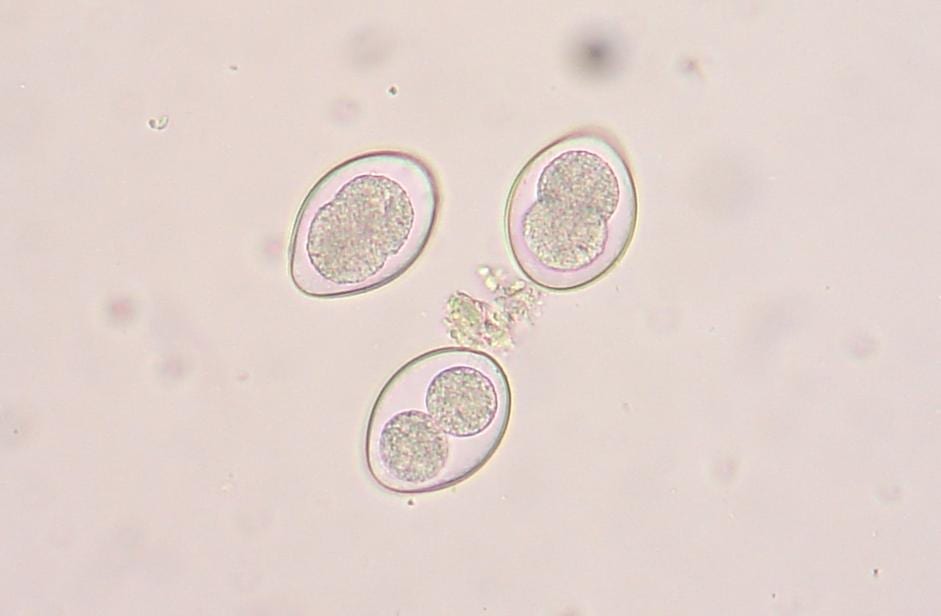
Of all of the health problems found in poultry, one of the most common is coccidiosis. It’s a parasitic disease cause by protozoa found in feces. Consumption of contaminated food or other particles continues the cycle.
Coccidiosis is a manifestation of Eimeria, a genus of apicomplexan parasites. Various strains of the disease present more severely than others. Unfortunately, the only way to known for certain the affective strain is to test an appropriate representative sample size postmortem.
E. acervuline and E. maxima occur primarily in the upper part of the small intestine. It causes subclinical coccidiosis. Its marked traits are weight loss and watery, whitish diarrhea. E. tenella, however, develops in the hind gut and is highly pathogenic. Notable symptoms include blood in droppings, high morbidity, and mortality.
The life cycle of coccidia is short and straightforward.
- A chicken ingests a microscopic sporulated oocyst or egg.
- The eggs pass into the intestinal tract and invade the cells of the intestinal wall.
- Several cycles of replication leads to the formation of new oocysts. This phase causes damage to intestinal tissues.
- New oocysts are shed in feces.
- Oocysts sporulate and become infective.
The entire cycle takes approximately 4 to 6 days.
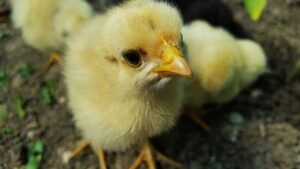 Young birds are much more susceptible to infection than older ones. As birds are exposed, they develop an immunity to the disease. Unfortunately, they only become immune to the specific strain to which they are exposed.
There are some methods of prevention. First and foremost, should be an adequate disinfection program. Because infection transmits through ingestion of droppings, or things contaminated by feces, it is important to keep feed, water, and chicks away from droppings. Excessively wet conditions exacerbate the disease, so floors should be kept adequately dried. Lastly, anticoccidial drugs can be mixed in the feed.
If you suspect a coccidiosis infection in a flock, a veterinarian can prescribe an anticoccidial treatment. Adequate litter treatment between flocks may help limit repetitive infections; windrowing or heat treatments are both effective at destroying the pathogens.



