
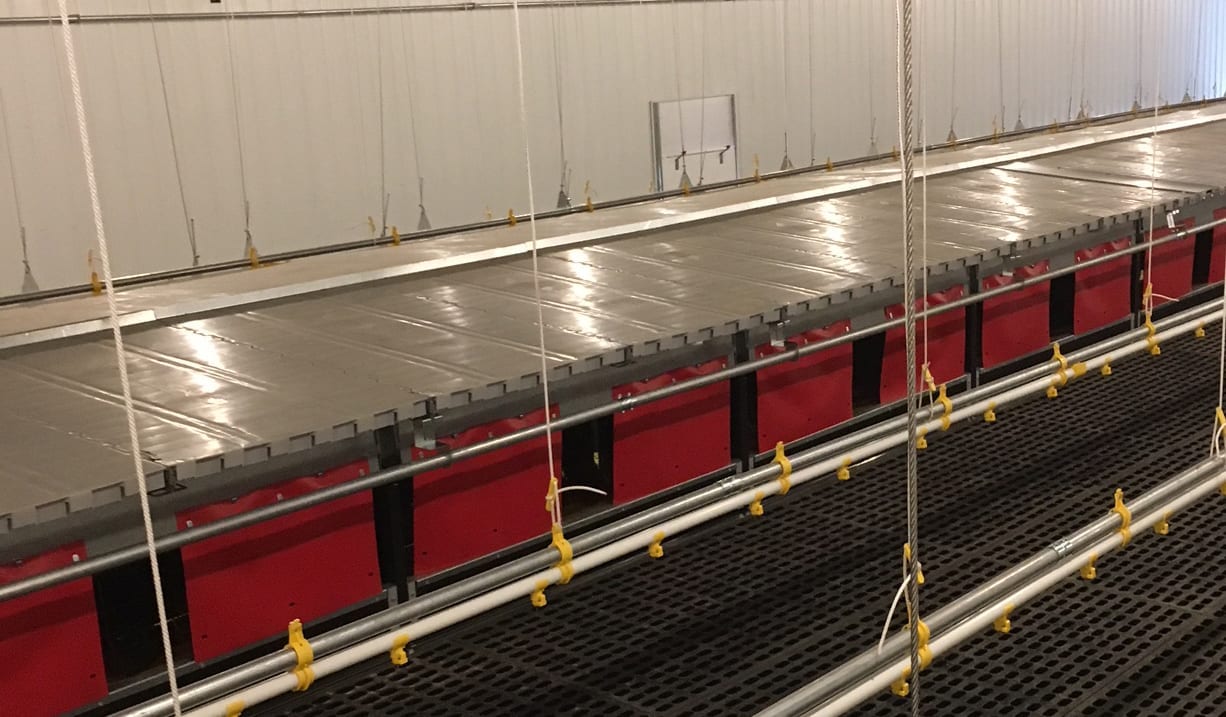
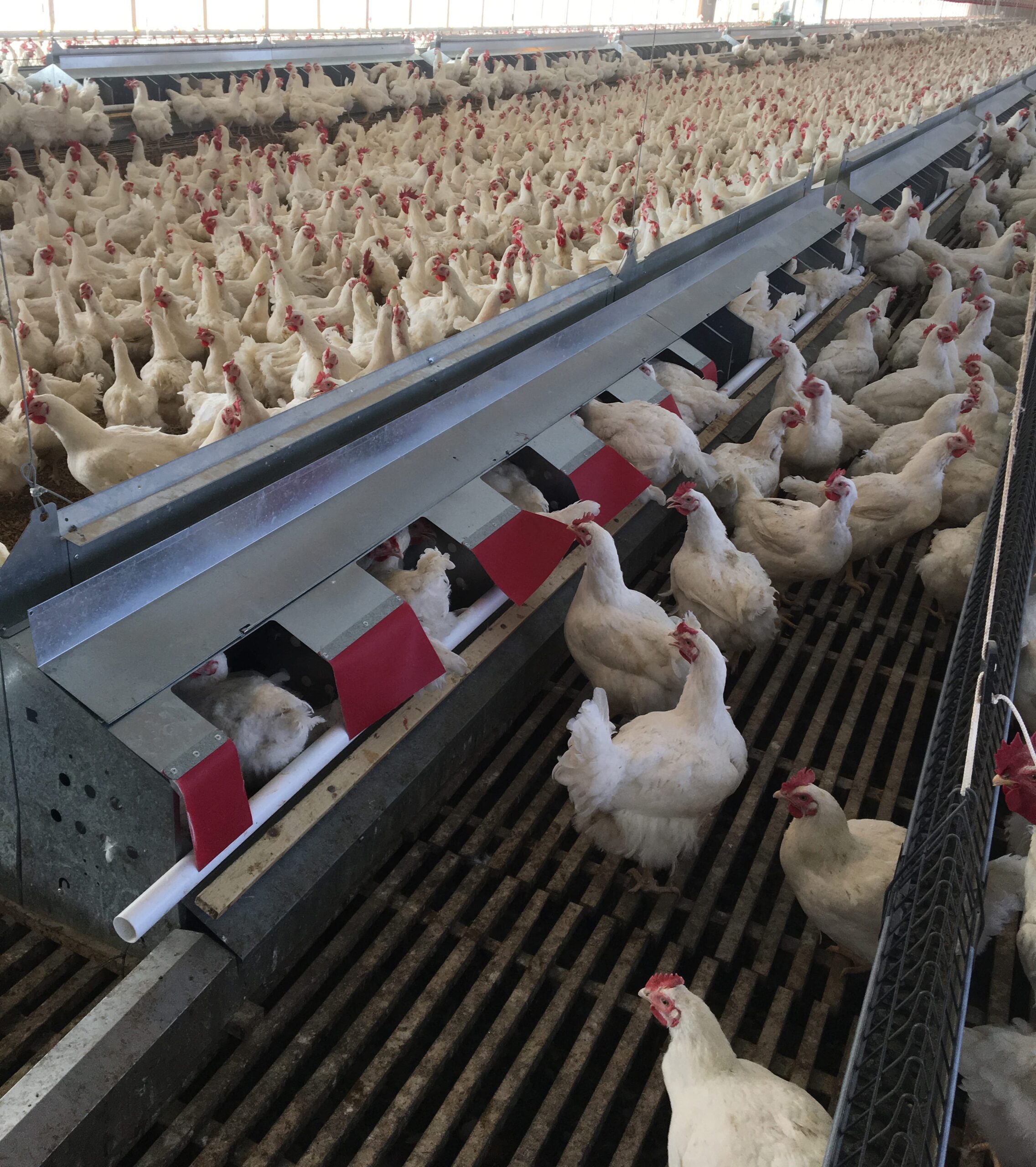
 The health and well being of broiler birds is contingent on the cleanliness of eggs laid in the breeder house. Optimal eggs are laid in the nest, where they are kept clean from debris and safely transported from the nest to the storage room.
Floor eggs are bound to happen, but too many floor eggs affect hatchability and profits. Floor laying becomes habitual. It’s important to prevent it form the start.
The first step is to train pullets during rearing. Providing them perches to climb on ensures they are strong enough to jump onto slats and find the nests. Pullets should be moved into the laying barn at least two weeks before the onset of lay so they can get adjusted to their new surroundings.
Keep nests closed until the first egg is laid. If nests are opened too soon the nest become a resting place rather than a laying place. Nests should be comfortable, dark, and readily available. An inadequate amount of nest space will lead hens to find an alternative place to lay, like the litter.
Keeping litter levels low, around one to two inches, prohibits hens from scratching the litter into a nest.
Nest pads
The nest is the first stage of an egg’s journey through the house. The nest pads are the landing area for the eggs, and they are bound to get dirty. Astroturf nest pads are designed to allow dirt and manure to fall away from the surface of the pad.
Pads should be cleaned between each flock. Pads can be washed in a bucket with soap and water or washed with a hose or power washer. Always disinfect after cleaning.
If pads are too worn – they have flat spots that prohibit the egg from rolling on to the belt – consider replacing the pads.
Egg belts
The egg makes its journey out of the house on the egg belt. It’s important the belt is clean.
Egg belts carry more than just eggs; they carry dirt, feathers, and manure as well. Polypropylene egg belts have large holes that allow dirt and debris to fall away from the eggs.
Plastic belts are easy to clean with just a broom and some warm soapy water.



