
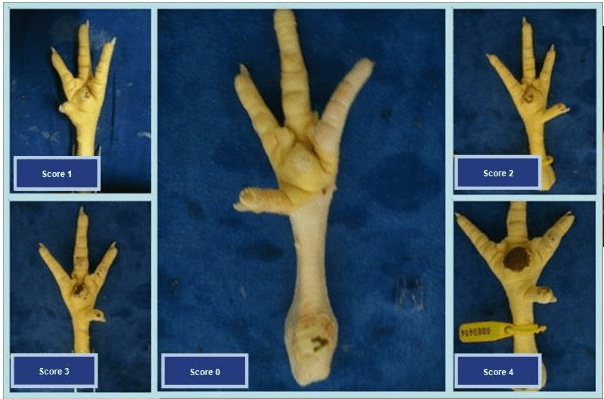
Footpad health is used as an audit criterion in US and Europe during animal welfare audits but it is a lesser concern than some other criterion. This is likely, at least in part, because growers don’t see any immediate financial incentive to improve paw quality. Integrators, however, have an incentive: chicken paws are really profitable in the overseas market.
So why should you bother with improving paw quality? You might be missing out on profits. Now, while integrators might not be offering an explicit “paw incentive”, you might be receiving an incentive that is cleverly disguised within flock performance payouts.
Footpad dermatitis is painful for the birds and it adversely affects the number of times those birds will move towards feeders and drinkers. If they’re not eating and drinking, they’re not gaining weight – or value.
So how can you improve foot health?
DON’T use poor quality bedding that has chips, chunks, and splinters. This can cause cuts and abrasions on the feet making them more susceptible to disease.
DON’T skimp on how much bedding is in the house. Any fewer than 4” isn’t enough to absorb the worst of the moisture. However, too much litter (6-8”) leads to a hard-pan on the dirt floor, and this will be a source of moisture and ammonia – a threat not only to birds’ feet, but also their eyes and respiratory tract.
DON’T under-ventilate when using new litter. Ammonia may be a lesser problem, but under-ventilating allows moisture and humidity to grow rapidly, causing damp litter.
DO windrow litter between flocks to dry litter and break up hard-pan. Try to expose as much of the litter as possible to the air without digging into the dirt floor.
DO keep litter as dry as possible. Mixing fans and minimum ventilation can work together to this end. Ventilate the house for the Relative Humidity to prevent moisture buildup around the drinker and feeder lines and the sidewalls. Ideal Rh values are between 45 – 55%.
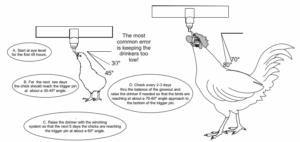
DO minimize leaks and spills by maintaining the correct height and pressure in the water lines. Replace leaky drinkers.
DO use an acidifying agent in the litter to minimize ammonia.



